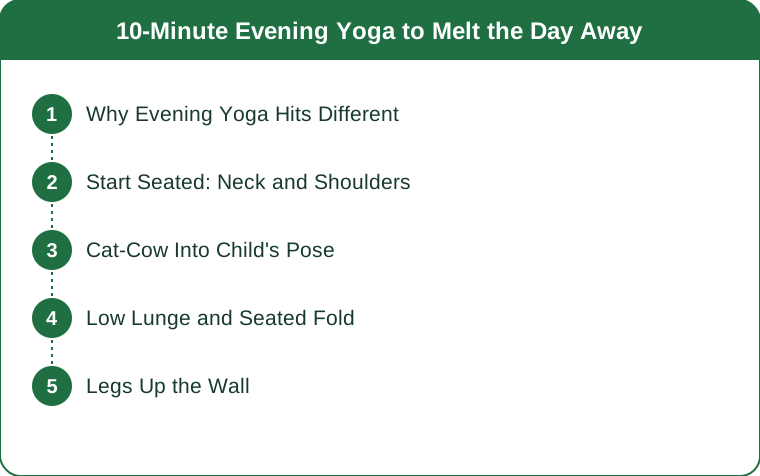
10-Minute Evening Yoga to Melt the Day Away
It’s 9:40pm. Your shoulders are somewhere around your ears, your lower back has opinions about the chair you sat in all day, and you’re about to lie down and ask your nervous system to shut off like a light switch.
It doesn’t work that way. But ten minutes on the floor first? That works.
Quick Answer: A 10-minute evening yoga sequence works by shifting you from fight-or-flight into rest-and-digest — long holds, slow exhales, no effort. The order that works: 90 seconds of neck and shoulder release, 2 minutes of cat-cow into child’s pose, 3 minutes of low lunge and seated fold, then 3 minutes with your legs up the wall. Do it nightly for a week and you’ll notice the difference in how fast you fall asleep.
Why Does Evening Yoga Feel So Different From Morning Yoga?
Because the goal is the exact opposite, and the sequence should be too.
Morning yoga is about waking things up: faster transitions, standing poses, some heat. Evening yoga is about downshifting. Long holds, heavy limbs, and — the part most people skip — a longer exhale than inhale.
That last piece is doing most of the work. When your exhale is longer than your inhale, you nudge your parasympathetic nervous system into gear — the “rest and digest” side that lowers heart rate and tells your body the day is over. Try counting: inhale for 4, exhale for 6. You’ll usually feel the shift within about a minute.
Think of this ten minutes as stretching and a lullaby in one. It is not a workout. If you’re getting sweaty, you’re doing evening yoga wrong, which is a pleasant sentence to be able to write.
What Should a 10-Minute Evening Yoga Sequence Include?
Four blocks, top to bottom, in this order.
Minutes 0–1:30 — Seated neck and shoulders. Sit cross-legged. Drop one ear toward that shoulder and hold for 5 slow breaths. Switch. Then roll your head through gentle semicircles, front only — chin to chest, ear toward shoulder, back through the middle. Finish by threading your arms into a loose eagle wrap and letting your upper back round.
The day lives in your neck and traps. Evict it first, before anything else, because releasing here makes everything downstream easier.
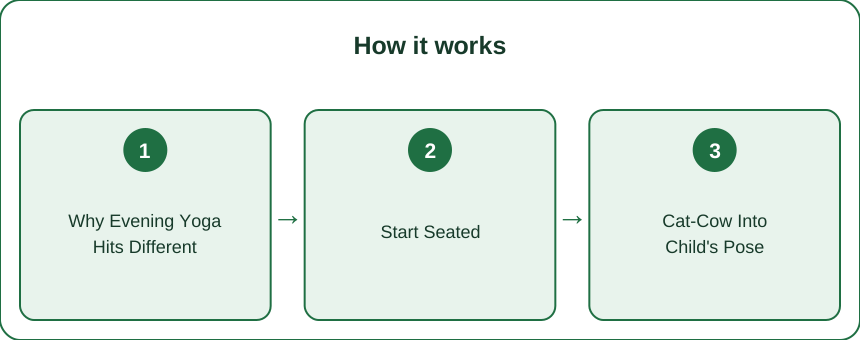
Minutes 1:30–4:00 — Cat-cow into child’s pose. On hands and knees, move slowly between arching and rounding your spine, one full cycle per breath, for about 10 cycles. Then sit your hips back to your heels, arms forward or alongside you, and stay in child’s pose for 10 full breaths. Let the floor take your weight completely. This is the melt in motion.
Minutes 4:00–7:00 — Low lunge and seated forward fold. Step one foot forward into a low lunge, back knee down on something soft, and sink gently for 8 breaths. Switch sides. Your hip flexors have been shortened by sitting all day and this is where you pay that back.
Then sit, legs long, and fold forward. Bend your knees generously — this is not a flexibility test and tonight is not for records. A forward fold with soft knees quiets the nervous system just as well as one with straight legs, and it doesn’t make your hamstrings argue.
Minutes 7:00–10:00 — Legs up the wall. Scoot your hips close to a wall, swing your legs up, let your arms fall heavy at your sides. Stay for 2–3 minutes. Circulation reverses out of your legs, heart rate drops, and the mind tends to follow the body. If you can roll straight into bed from here, do.
What Nobody Tells You About Evening Yoga
Ease is the entire point, and most people can’t do it. The single most common mistake is bringing morning-workout intensity to a wind-down practice — pushing deeper into stretches, holding tension, treating the forward fold as something to achieve. That raises arousal instead of lowering it, and you end up more alert than when you started. If you notice yourself gritting your teeth in a pose, back off by 20%. In the evening, the less-intense version genuinely works better.
Consistency beats duration by a mile. Ten minutes every night does dramatically more for your sleep than an hour once a week. This is a habit that trains an association — floor, dim light, slow breathing, sleep — and associations are built by repetition, not by volume.
Skip the mirror and dim the lights. Bright overhead light works against you here. One lamp is plenty.
Legs up the wall does more than it looks like it does. It’s the pose people skip because it seems like nothing is happening. It’s the pose most likely to actually make you sleepy. If you only have three minutes, do this one alone.
Comfort is functional, not fussy. Anything that digs in or slides down while you’re inverted pulls your attention back out of the practice. Soft, high-rise leggings that stay put in an inversion, or genuinely loose pants, are the whole equipment list.
Does Evening Yoga Actually Help You Sleep?
Gentle evening movement combined with slow breathing is one of the more commonly recommended wind-down practices, and the mechanism is straightforward: long exhales and low-intensity stretching support the shift out of a sympathetic (alert) state. Many people notice they fall asleep faster within a week or two of doing it nightly.
Two honest caveats. First, this is a wind-down aid, not a treatment. If you’re dealing with persistent insomnia, chronic pain that wakes you, or suspected sleep apnea, talk to a doctor or a sleep specialist — no stretching sequence substitutes for that. Second, if any pose creates sharp or radiating pain, especially in your lower back or down a leg, come out of it and check in with a physical therapist before continuing.
Within those limits: it’s ten minutes, it costs nothing, and the downside risk is that you spent ten minutes lying on the floor. Reasonable odds.
FAQ
How long before bed should I do evening yoga?
Anywhere from 30 minutes to right before you get in bed. Unlike vigorous exercise — which is usually better finished a couple of hours before sleep — a gentle wind-down sequence is designed to lead directly into bed. Many people do it as the literal last thing, in pajamas, lights already dimmed.
Do I need a yoga mat for this?
No. A carpet, a rug, or even a folded blanket works fine, since none of these poses involve gripping or balancing. The only place a little padding genuinely helps is under your back knee in the low lunge — a folded towel handles it.
Can I do this if I’m not flexible at all?
Yes, and honestly it works better if you don’t chase depth. Every pose here can be done with bent knees, hands on blocks or books, and a shortened range of motion. The nervous-system benefit comes from the slow breathing and the long holds, not from how far you fold.
TL;DR:
- Evening yoga works by downshifting — long holds, heavy limbs, exhale longer than inhale (try 4 in, 6 out).
- Sequence: neck and shoulders (90s) → cat-cow into child’s pose (2.5 min) → low lunge and seated fold (3 min) → legs up the wall (3 min).
- Ease is the point. Pushing deeper raises arousal and defeats the purpose. Back off 20% if you’re straining.
- Legs up the wall is the pose people skip and the one most likely to make you sleepy. Do it even if you skip everything else.
- Nightly for ten minutes beats weekly for an hour. You’re building an association, not a fitness adaptation.
- Persistent insomnia or pain that wakes you is a conversation for a doctor, not a stretching sequence.
See It in Motion
Seen here: UPF 50+ Short Sleeve Rashguard Swim Shirt — shop it on bubblelime.com
Keep Reading
This article is for general informational purposes only and is not medical advice. It is not a substitute for professional diagnosis or treatment. Always consult a qualified healthcare provider about your individual situation, especially before making significant changes to your diet or exercise routine.