How Often Should You Do Yoga to Notice a Difference?
Quick Answer: For flexibility, frequency beats duration - five to seven short sessions a week produce faster range-of-motion change than two long classes. For strength, two to three challenging sessions a week with rest between them works better. For stress and sleep, daily practice of any length wins, because the effect is largely acute and does not accumulate the same way. Most people want all three, and the practical answer is one longer class plus four to five ten-minute sessions.
You have been going to a Wednesday class for two months. You like it, and you are not sure anything has actually changed. The problem is probably not the class. It is that once a week is the wrong dose for what you are hoping to get.
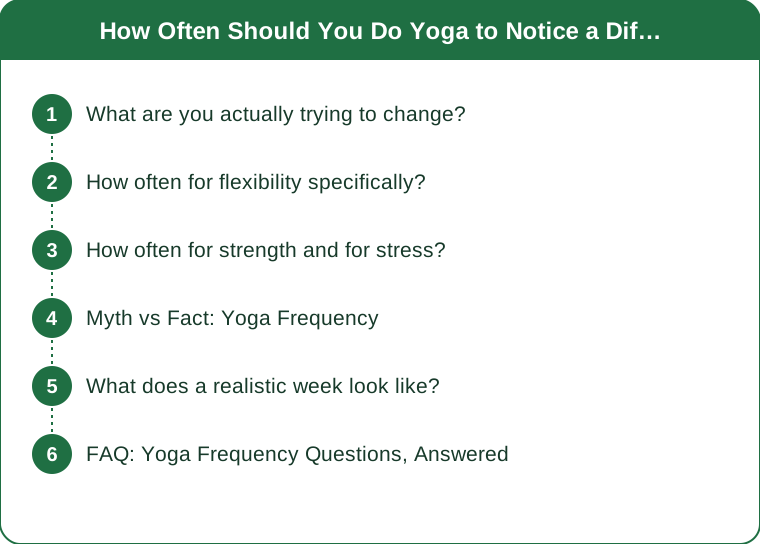
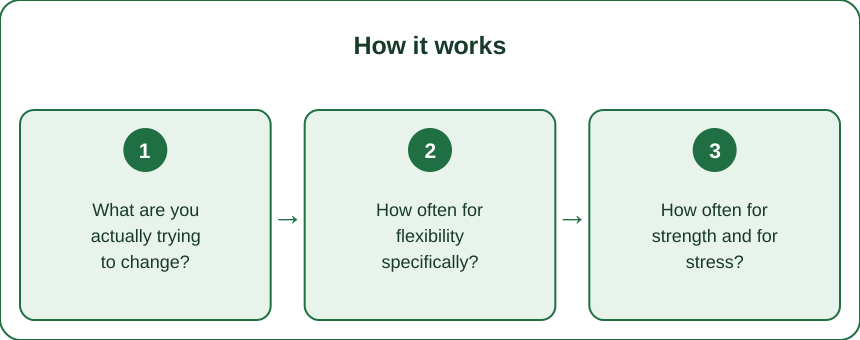
What are you actually trying to change?
Flexibility, strength, balance, and stress regulation are four different adaptations with four different dose requirements. A schedule that is excellent for one is often mediocre for another, which is why the how often question has no single answer.
Flexibility is frequency-driven. Range of motion improves through repeated, regular exposure. The research on stretching consistently favours more frequent, shorter sessions over fewer long ones for the same weekly total.
Strength is intensity-driven and needs recovery. Holding a challenging chaturanga or a long warrior sequence is resistance training, and muscle adapts during rest, not during the session.
Stress regulation is largely acute. The calming effect of a session is strongest in the hours after it. It builds a modest baseline effect over months, but mostly you get the benefit on the day you practise - which argues for something every day rather than something long once a week.
Balance sits in between, improving with frequent brief exposure much like flexibility.
How often for flexibility specifically?
Five or more sessions a week, even if they are ten minutes. This is the single highest-return change most people can make.
Hold static stretches for 30 to 60 seconds and repeat each two to three times. Under 30 seconds does relatively little for range; over 60 has diminishing returns per minute spent.
Expect the first changes in two to four weeks, and they will initially be neurological - your nervous system allowing more range - rather than structural. Actual tissue change takes closer to eight to twelve weeks.
Warmth helps more than people credit. The same hold produces more range in a warm body, which is one practical argument for practising in the evening or after any other activity rather than cold first thing.
And direction matters as much as duration. Hamstrings and hip flexors respond quickly; shoulders and thoracic spine are slower and need more frequent, gentler exposure. If your goal is a specific shape, work that pattern most days rather than doing a general flow twice a week.
How often for strength and for stress?
Strength: two to three demanding sessions a week, with at least a day between them. A vinyasa or power class where you genuinely fatigue counts as training and should be spaced like training. Doing that daily is how people end up with cranky wrists and shoulders by week six.
Practical split: two strong classes plus easier daily work. The easy daily sessions do not interfere with recovery and they cover the flexibility and stress goals at the same time.
Stress and sleep: something every day, length almost irrelevant. Ten minutes of slow breathing-led movement in the evening does more for sleep across a week than one 90-minute class.
For sleep specifically, put it in the last hour of the day and keep it gentle. A strong practice late in the evening can be activating enough to work against you.
And do not use the stress practice as a performance. The measurable effects on stress markers come from slow, breath-led, low-effort work. A hard flow is good training and a poor relaxant.
Myth vs Fact: Yoga Frequency
Myth: you need at least an hour for it to count. Fact: for flexibility and stress, ten focused minutes most days outperforms one weekly hour. Duration matters for strength; frequency matters for nearly everything else.
Myth: daily yoga is always safe because it is low impact. Fact: daily hard vinyasa is repetitive loading of wrists, shoulders, and hamstrings, and overuse injuries in yoga are common and well documented. Daily is safe when intensity varies.
Myth: you should feel it the next day. Fact: soreness is a poor measure of a useful session, and chasing it in a flexibility practice pushes people into ranges they cannot control.
Myth: missing a week undoes your progress. Fact: range of motion declines slowly - noticeable after roughly four weeks without practice, not after one. What you lose in a week is the habit.
Myth: more advanced poses mean more benefit. Fact: the health outcomes people actually want - mobility, sleep, lower stress, fewer aches - come almost entirely from consistent basic work. The advanced shapes are a hobby, not a dose.
What does a realistic week look like?
The version that works for most people: one 45 to 60 minute class, plus four to five 10-minute home sessions.
Monday, 10 minutes: hips and hamstrings, three holds of 45 seconds each side.
Wednesday, full class: the strong one, the social one, the one with a teacher correcting you.
Tuesday, Thursday, Friday, 10 minutes: rotate through hips, shoulders and thoracic spine, and a slow breath-led sequence in the evening.
Sunday, 20 minutes if you want it: longer, easier, no agenda.
Keep the mat out. The rolled-up mat in a cupboard is the most common reason ten-minute sessions do not happen. Friction, again, beats motivation.
Reassess at eight weeks, not eight days. Pick one measurable thing - fingertips to floor, how a specific pose feels, how you sleep on practice days - and check it then. Weekly checking produces noise and discouragement.
FAQ: Yoga Frequency Questions, Answered
Is it bad to do yoga every single day?
Not if intensity varies. Daily gentle or mobility-focused practice is well tolerated. Daily strong vinyasa is repetitive loading and is a common route to wrist and shoulder overuse. Alternate hard and easy.
How long until I actually see flexibility change?
Two to four weeks for noticeable change with near-daily practice, eight to twelve weeks for change that persists through a break. Once or twice a week, expect it to take considerably longer.
Do short home sessions really count if I am not being corrected?
For flexibility and stress, yes, and they are the bulk of the benefit. Keep a class in the mix for feedback on the loaded positions, where form matters most.
This is general information, not medical advice. Sharp or nerve-like pain in a stretch is a signal to stop, not to breathe through.
TL;DR:
- Flexibility responds to frequency: five to seven short sessions a week beat two long ones with the same weekly total.
- Strength needs two to three demanding sessions with recovery between them, not daily intensity.
- Stress and sleep benefits are mostly same-day, so something every day matters more than something long.
- One class plus four or five ten-minute home sessions covers all three, and leaving the mat out is what makes it happen.
Once a week is not a failed practice, it is just the wrong dose for the thing you were hoping for. Add ten minutes on four other days and check again in eight weeks.
See It in Motion
Seen here: Bootcut Capri Yoga Pants with Pockets — shop it on bubblelime.com
Keep Reading
This article is for general informational purposes only and is not medical advice. It is not a substitute for professional diagnosis or treatment. Always consult a qualified healthcare provider about your individual situation, especially before making significant changes to your diet or exercise routine.