Why Your Transitions Are Harder Than the Poses Themselves
Quick Answer: Poses are static positions your body can settle into. Transitions require controlling your centre of mass while it moves, which uses different muscles in a different way - mostly eccentric control and single-leg stability. If your flow feels lurchy, slow the transitions to double the pose duration for two weeks and the problem usually resolves itself.
Most people practising at home spend all their attention on shapes. Alignment cues, hip position, where the front knee tracks. Then they lurch between those carefully constructed shapes and wonder why the flow does not feel like the video.
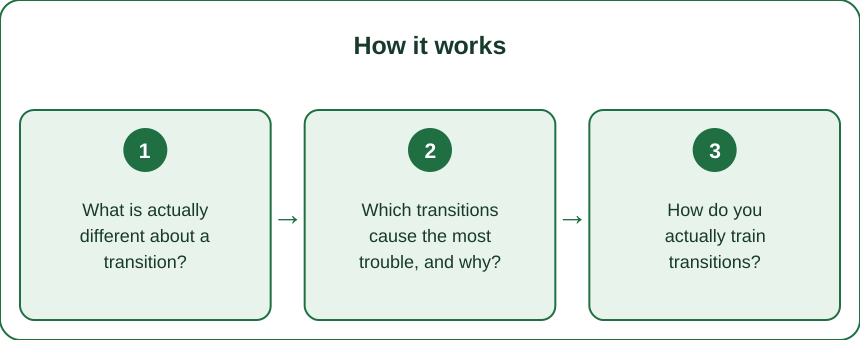
What is actually different about a transition?
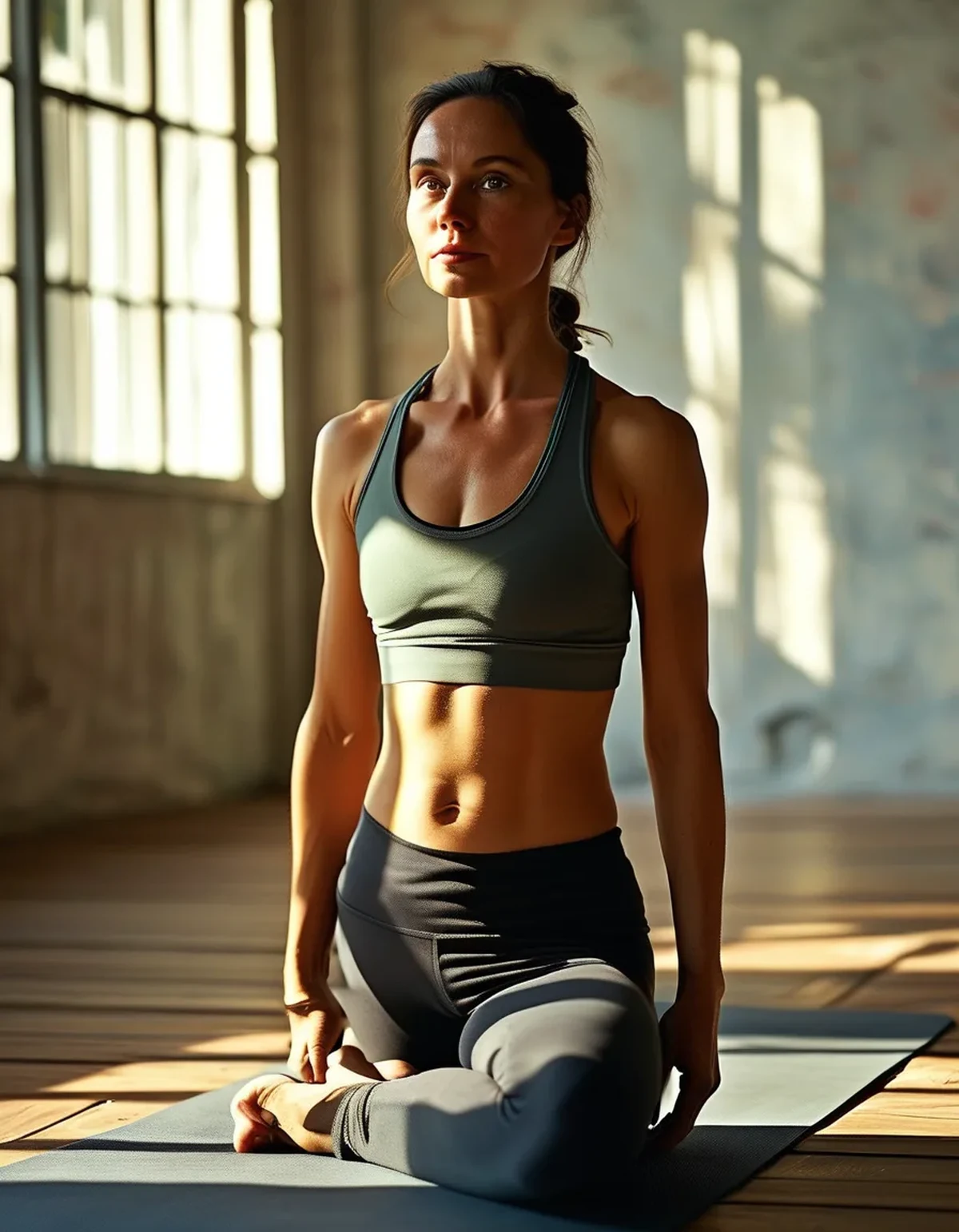
A pose is a balance problem you have already solved. A transition is one you are solving in real time. Once you are settled in a shape, your base of support is fixed and your centre of mass is inside it. Small corrections keep you there.
During a transition, your base of support is changing while your centre of mass is also moving. Two variables instead of one, and they have to stay coordinated. That is genuinely harder, and it is why an experienced practitioner looks different from a beginner even when both can hold the same poses.
The muscular demand shifts too. Holding a pose is largely isometric. Lowering into or out of one is largely eccentric - muscle producing force while lengthening. Eccentric control fatigues differently and develops separately.
And there is a proprioceptive element. Your body’s sense of where it is in space updates continuously during movement, and that system is trainable but only by moving.
Which is why holding poses longer does not fix wobbly transitions. They are different skills with different adaptations.
Which transitions cause the most trouble, and why?
High lunge to warrior three. The moment the back foot leaves the floor is a total handover of the balance task to one leg, and most people rush it because it is uncomfortable. Try pausing for two full breaths with the back toes just barely touching before committing.
Chaturanga to upward dog. This is a shoulder control problem disguised as a flow problem. If your chest drops before your elbows are ready, you land in upward dog with the shoulders already collapsed. Slow the lower, and stop at a height you can actually control.
Downward dog to low lunge. The step-through is the most-cheated transition in yoga. Most people hop, drag, or land short. The honest version is a slow controlled step, and it exposes hip flexor strength and hamstring range immediately.
Standing to seated. Frequently ignored entirely - people just sit down. Lowering with control through a squat is a legitimate strength transition and treating it as one changes the practice.
Crescent to standing splits. The classic mid-flow collapse point, because the hinge forward and the leg lift happen at once. Separate them - hinge first, then lift.
How do you actually train transitions?
Reverse the ratio. If you normally hold poses for five breaths and transition in one, flip it. Two breaths in the pose, four breaths moving. It feels absurd and it works within about two weeks.
Pause mid-transition. Stop halfway. Hold for three breaths. This is the single most effective drill and it is uncomfortable enough that most people avoid it. Halfway through a step-through, halfway down into chaturanga, halfway into warrior three.
Practise the same transition ten times in a row. Not the full flow - just the one transition, forward and back. Ten reps, then move on. This is how strength training works and there is no reason yoga transitions should be exempt.
Film yourself once. Side angle, one flow. Most people have no idea their hips shift or their chest drops until they see it, and one video is worth ten cues.
Add single-leg work off the mat. Single-leg deadlifts, step-downs from a low box, and slow split squats build the eccentric control that transitions demand. Three sets of eight, twice a week.
What Nobody Tells You About Smooth Flows
Smooth is slow, not fast. The flows that look effortless are moving more slowly than they appear, with more time under control. Speed is what makes a transition look lurchy.
Breath drives the pacing, not the other way round. If you are running out of breath mid-transition, the transition is too long for your current breath capacity - which means either slow the breath or shorten the movement. Holding your breath through the hard part is the near-universal habit and it removes your core’s main stabilising mechanism.
Your mat matters more here than in poses. A slippery mat means your feet cannot commit, so you unconsciously under-commit to every weight shift. This shows up as a general wobbliness that no amount of practice fixes.
Cold rooms make transitions worse specifically. Static poses are relatively unaffected, but the eccentric control and joint range that transitions need are both temperature-sensitive. As the mornings cool, expect your transitions to be the first thing that suffers.
Progress here is not linear and it is not visible in the pose photos. Nobody photographs a transition, which is probably why the whole category gets ignored.
FAQ: Yoga Transition Questions, Answered
Should I stop trying to flow and just hold poses?
No - but consider separating them. Do a few minutes of deliberate transition work, then a flow, then longer holds. Trying to do all three at once in a single continuous sequence means the transition practice always gets sacrificed.
Why do I wobble more on one side?
Asymmetry is normal and nearly universal. It usually reflects a dominant leg and habitual standing patterns rather than anything wrong. Work the weaker side first and do one extra set on it. If the difference is dramatic or accompanied by pain, get it looked at properly. This is general information, not medical advice.
How long before transitions feel better?
Most people notice a change within two to three weeks of deliberate work, because a lot of the initial gain is coordination rather than strength. Strength gains that show up in harder transitions take closer to eight weeks.
TL;DR:
- Poses are static balance problems. Transitions require controlling a moving centre of mass, which is a separate skill.
- Transitions demand eccentric control and single-leg stability - holding poses longer does not train either.
- Flip your ratio: shorter holds, much slower transitions, for two weeks.
- Pause halfway through the hard part and hold for three breaths. It is the highest-value drill available.
- Smooth flows are slower than they look, and holding your breath is what makes them lurch.
Nobody films their transitions and nobody photographs them, which is exactly why they are the part of most home practices that never improves. Two weeks of attention changes the whole flow.
See It in Motion
Seen here: Racerback Tank Top - White — shop it on bubblelime.com
Keep Reading
This article is for general informational purposes only and is not medical advice. It is not a substitute for professional diagnosis or treatment. Always consult a qualified healthcare provider about your individual situation, especially before making significant changes to your diet or exercise routine.