Why Your Yoga Flow Feels Different on Carpet Than Hardwood
Quick Answer: Carpet compresses under your hands and feet, which makes balance poses genuinely harder and standing poses feel unstable, while it makes kneeling and floor work more comfortable. Hardwood gives you a rigid, predictable base for balance and standing sequences but transmits every bit of pressure into your knees and wrists. Neither is wrong. If you have a choice, do standing and balance work on the hard floor and floor sequences on the soft one.
Most people blame their body when a familiar flow suddenly feels wobbly. They moved the mat into a different room, or the rug got rolled away for the season, and the practice changed without anyone telling them why.
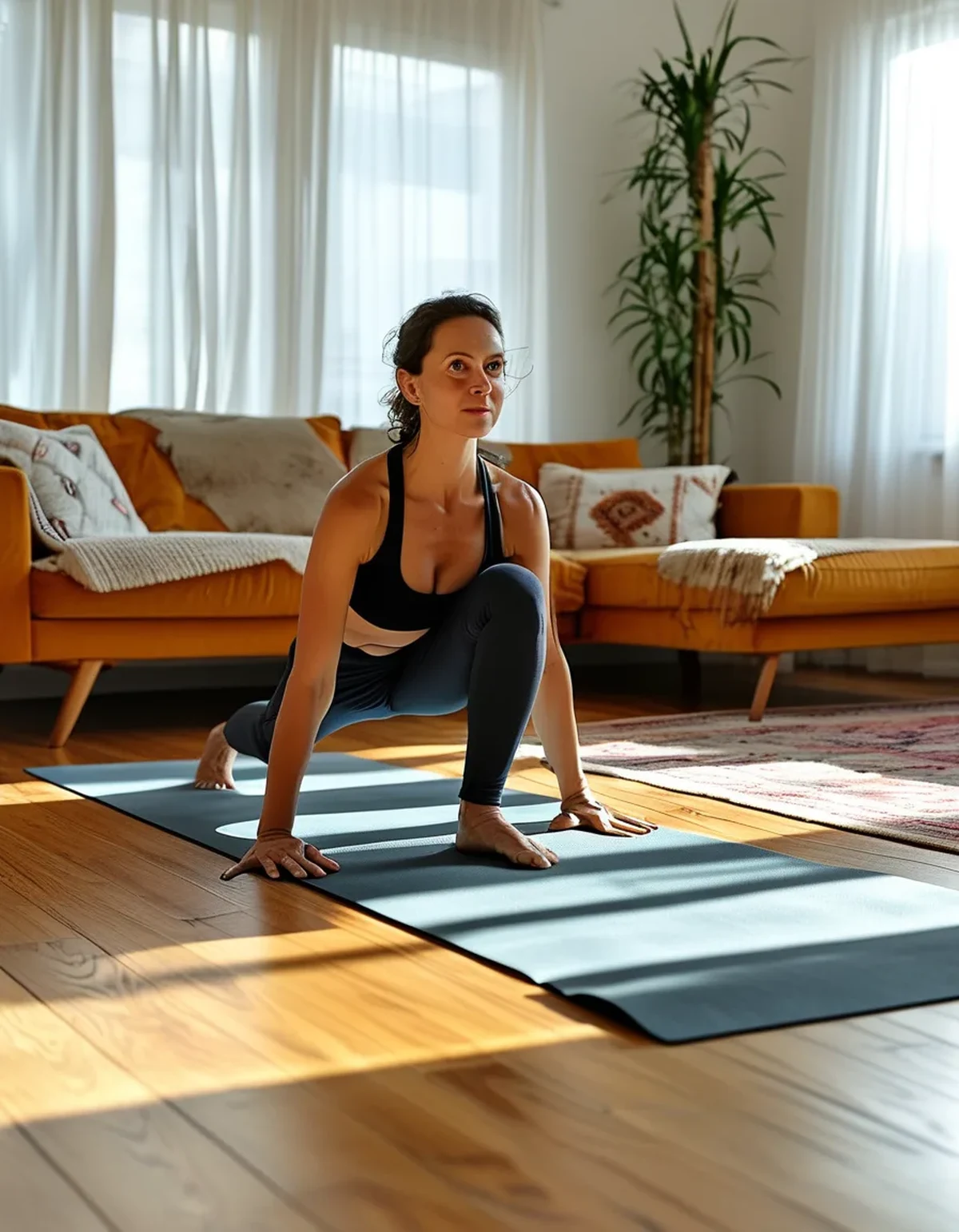
What does carpet actually do to a pose?
Balance is a feedback loop. Your foot presses down, the ground pushes back with an equal and immediate force, and the small pressure sensors in your sole report exactly where your weight is. That information travels up and your ankle makes hundreds of tiny corrections a minute without you noticing.
Carpet interrupts every part of that. It compresses, so the push back arrives late and softer. It compresses unevenly, so the correction your ankle makes is based on slightly wrong information. And because the pile shifts, the correction itself changes the surface.
The result is that a tree pose you can hold for ninety seconds on wood becomes a genuine effort on carpet. This is not a failure of your balance. It is a harder version of the same task, and there is a real argument for training on it deliberately.
The same effect in a downward dog is less about balance and more about the hands. Fingers press into a soft surface and spread, so the weight distribution across your palm changes and more load ends up in the heel of the hand and the wrist.
Why does the mat slide on carpet and not on wood?
This confuses people because carpet feels grippier than wood. The mat is not sliding against the carpet, it is deforming with it. Push your hands forward in a plank and the pile bends, the mat travels a centimetre with it, and then springs back. Repeat that fifty times through a flow and you have a mat that has migrated across the room.
On a hard floor the mat either grips or it does not, and grip is a property of the mat’s underside plus how clean the floor is. A rubber-backed mat on clean wood does not move. The same mat on a dusty floor or on top of a polished finish slides in a way that has nothing to do with your technique.
The fix for carpet is a thinner, denser mat rather than a thicker one. Thick soft mat plus thick soft carpet stacks two unstable layers. A thin dense mat over carpet gives you a firm platform with the carpet doing the cushioning underneath, which is genuinely the best of both.
The fix for wood is a damp cloth over the floor before you start and, if slipping persists, a mat with a textured natural rubber base rather than a smooth one.
Myth vs Fact: Yoga Surfaces
Myth: Thicker mats are better for hard floors. Fact: thicker mats are better for your knees and worse for your balance, on any floor. Most people who buy a thick mat for hardwood end up wobbling through standing sequences and blaming themselves. Consider a thin mat plus a folded blanket under the knees when you need it.
Myth: Carpet is the easier surface. Fact: it is easier on joints and harder on stability. Which one matters depends entirely on what your sequence contains.
Myth: You need a special mat for carpet. Fact: you need a thinner one, which you may already own. The specialist carpet mats on the market are mostly thin dense mats with better marketing.
Myth: Slipping means you need more grip. Fact: on carpet, slipping usually means the surface is moving, not the mat, and more grip on the top surface does nothing. Diagnose which layer is moving before you buy anything.
Myth: The floor does not matter for gentle practices. Fact: for restorative and floor-based work the floor matters more, not less, because you are in contact with it for minutes at a time rather than seconds.
How should you adjust the flow for the surface you have?
On a soft floor, expect balance work to take longer to settle, so hold a preparatory position for a few extra breaths before committing. Use a wall or a chair for single-leg poses without treating it as a compromise. Standing sequences are fine as long as the transitions are slower, because the surface will not catch a fast weight shift the way wood does.
What carpet is genuinely better for: anything on the knees, forearm work, supine sequences, hip openers held for a minute or more, and any practice done late at night when comfort matters more than precision.
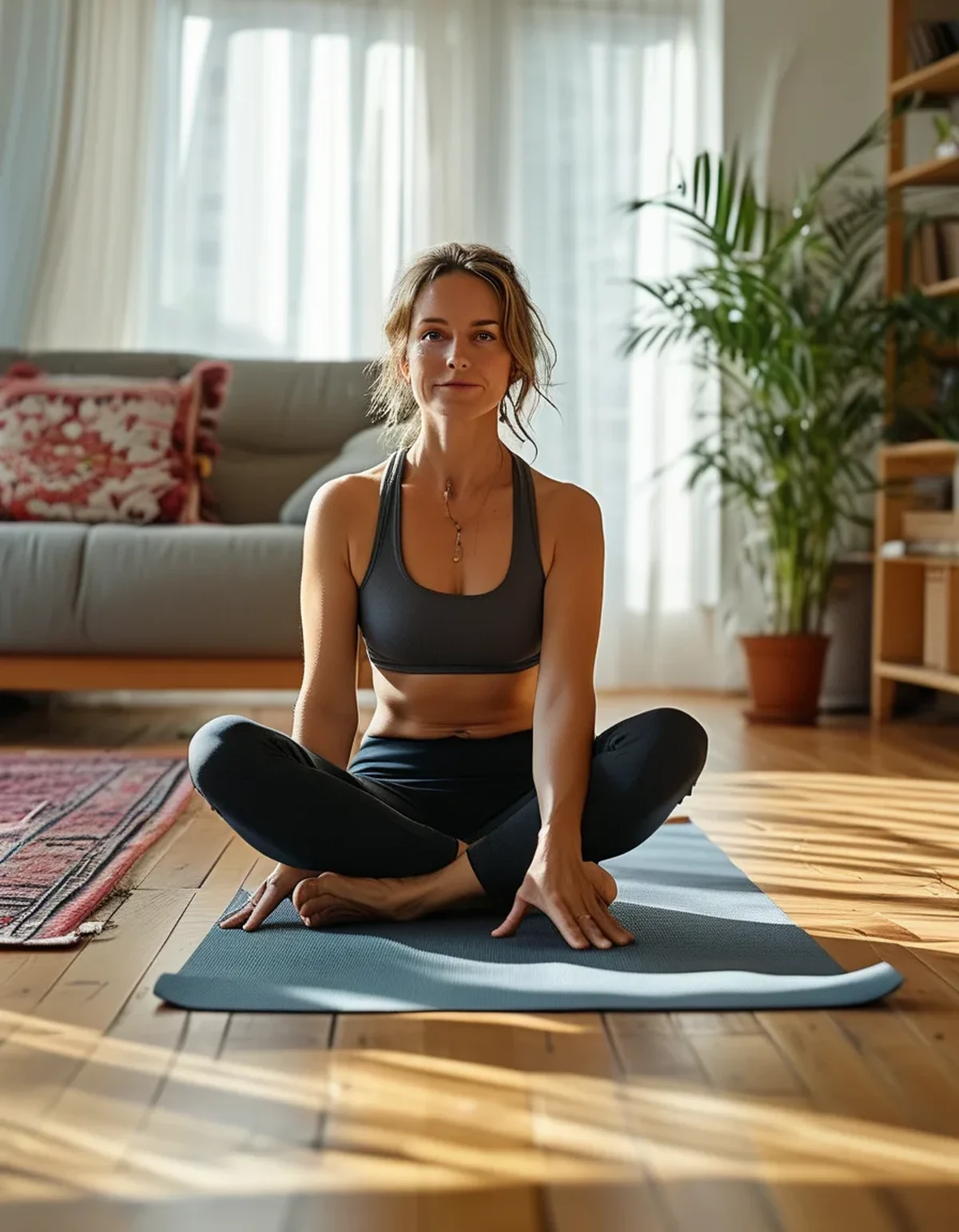
On a hard floor, protect the joints that take direct pressure. A folded towel under the kneecap in a low lunge, a folded blanket under the sit bones for seated forward folds, and hands turned slightly out in plank to reduce wrist extension. Hard floors are unforgiving in exactly the same proportion that they are stable.
And if you can, keep one room for each. A five-minute morning flow on the wooden hallway floor and a longer evening sequence on the rug in the bedroom is not indecision. It is picking the right tool twice.
FAQ: Yoga Surface Questions, Answered
Can I practise directly on carpet with no mat?
For gentle floor work, yes. For anything involving hands taking weight, no. Carpet fibres provide no consistent grip for palms and the friction is unpredictable, which is how wrists get strained. A mat also creates a clean defined space, which matters more for practice consistency than people expect.
Is a hardwood floor bad for my joints over time?
Not inherently. The load in yoga is low and slow compared with running. What causes trouble is repeated pressure on unpadded kneecaps and wrists, and both are solved with a blanket and a small change of hand position rather than by changing floors.
What about tile or concrete?
Colder and harder than wood, with the same stability advantage and a bigger comfort penalty. Add padding under contact points and expect your body to take longer to warm up, particularly in autumn.
This is general information, not medical advice. If a pose produces sharp joint pain on any surface, stop and see a professional rather than adjusting your mat.
TL;DR:
- Carpet compresses and delays the feedback your ankles use for balance, which makes standing poses genuinely harder.
- The mat slides on carpet because the carpet is moving, not because the mat lacks grip.
- Thin and dense over carpet, thicker or padded contact points on wood.
- Do balance and standing work on the hard floor, floor and restorative sequences on the soft one.
- If the flow suddenly feels different, check what changed under the mat before you check yourself.
A practice that felt effortless in one room and shaky in another is not a sign of regression. It is a sign that the floor is part of the pose, and it always was.
See It in Motion
Seen here: High Waist Yoga Leggings with Side Pockets — shop it on bubblelime.com
Keep Reading
This article is for general informational purposes only and is not medical advice. It is not a substitute for professional diagnosis or treatment. Always consult a qualified healthcare provider about your individual situation, especially before making significant changes to your diet or exercise routine.