Hip-Opening Yoga: Releasing the Joint That Holds Your Week
Yoga teachers say the hips ‘hold emotion’ — and whatever your mysticism tolerance, the mechanical truth stands: sitting shortens hip flexors, stress braces glutes, and the hip complex quietly collects the week. The opening guide: the sequence, the science and the honest version of the crying-in-pigeon phenomenon.

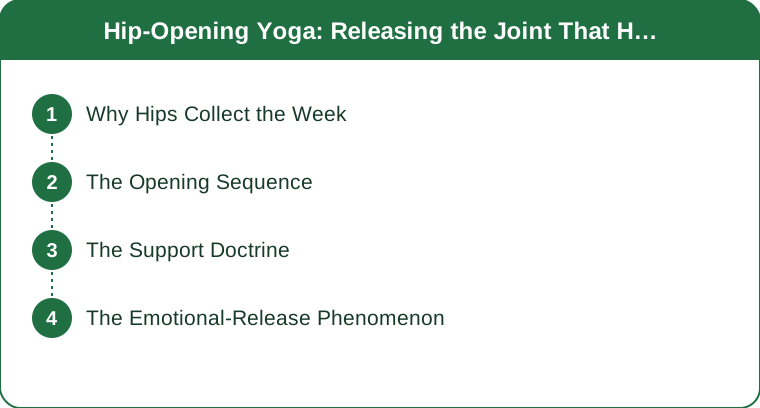
Why Hips Collect the Week
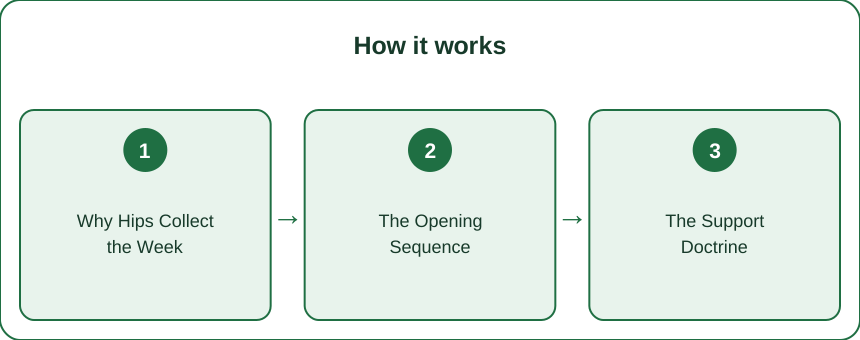
The mechanical story: sitting is a hip-flexor shortening program (eight daily hours at ninety degrees — the desk body’s hips adapt to the chair’s shape; the standing-up tightness is the adaptation talking), the stress-bracing layer (the fight-or-flight pattern includes hip-and-glute tension — the clenched, guarded posture nobody notices themselves holding), the compensation cascade (tight hips send their workload to the lower back and knees — half of the adjacent complaints trace here), and the athletic double-bill (runners and lifters add training tightness to sitting tightness — the strongest hips are often the stiffest).
The Opening Sequence
Gentle to deep (five poses, ten-plus minutes): the low lunge (the hip-flexor opener — the front of the hip that sitting shortened; back knee padded, hips sinking forward-and-down, thirty-plus seconds each side), the figure-four (lying or seated — the outer-hip and glute release; the chair version works at desks), the butterfly (the inner-thigh and groin line — the wall-supported version for the tight), the frog pose (the deep inner-hip option — approached respectfully, exited gracefully), and pigeon (the king — the outer hip in its deepest widely-taught stretch; the supported version below is most people’s correct version). Every pose: long holds, deliberate exhales — the yin-yoga time signature.
The Support Doctrine
Making deep poses safe: props aren’t training wheels (the folded blanket under pigeon’s hip changes the pose from grippy to released — a supported deep stretch RELEASES; an unsupported one braces against gravity, which is the opposite of the goal), the knee-respect rules (hip stretches route force through knees when hips run out of range — the pigeon front-shin angle adjusts to the knee’s comfort, always; sharp knee anything is an exit signal), the edge-minus-ten doctrine (the yin rule applies: find the edge, back off ten percent, breathe there — hips release on exhales over minutes, never on force over seconds), and the both-sides honesty (everyone has a tighter side — it gets the same time, not less; the asymmetry is the finding).
The Emotional-Release Phenomenon
The crying-in-pigeon thing, honestly: the reports are real (unexpected emotion during deep hip work is common enough that every yoga teacher has seen it), the sober explanation (long holds + deep breathing + a body region associated with bracing = a nervous-system downshift big enough to surface what busyness suppressed — the mechanism is parasympathetic release, not stored-emotion mysticism; the distinction matters less than the experience), the practical guidance (feelings arriving mid-pose need nothing done — breathe, let them pass or not, continue or rest; the mat is a fine place for it), and the aftercare note (deep hip sessions end with a settling pose — the knees-to-chest and savasana landing that lets the downshift complete). The hips held the week; the exhale files it.
Lunge, figure-four, butterfly, frog, supported pigeon — long holds, longer exhales. The hips collect the week mechanically — and release it the same way, blanket included.
See It in Motion
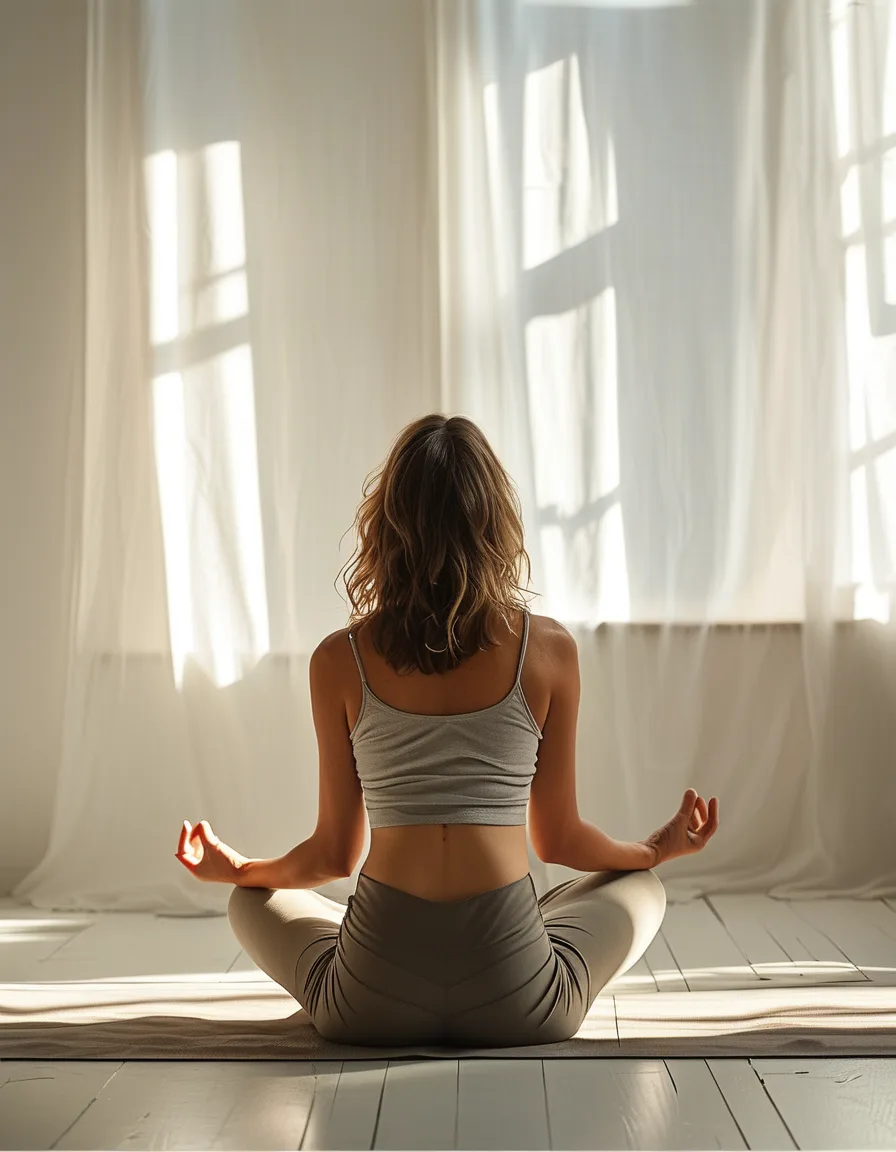
Seen here: High Waist Bootcut Yoga Pants — shop it on bubblelime.com
Keep Reading
This article is for general informational purposes only and is not medical advice. It is not a substitute for professional diagnosis or treatment. Always consult a qualified healthcare provider about your individual situation, especially before making significant changes to your diet or exercise routine.