Why the Same Flow Feels Completely Different Morning Versus Evening
Quick Answer: You are genuinely less flexible in the morning. Spinal discs rehydrate overnight and are at their fullest on waking, joint fluid is more viscous when cold, and core body temperature is at its daily low. That combination means less range of motion and more stiffness in early sessions. Evening practice typically allows more range; morning practice typically feels more effortful and often more calming afterward. Neither is better - they suit different intentions.
The same sequence, done at 6:30am and at 7pm, produces two different experiences in the same body.
That is not inconsistency in your practice. It is a set of measurable daily rhythms doing exactly what they do.

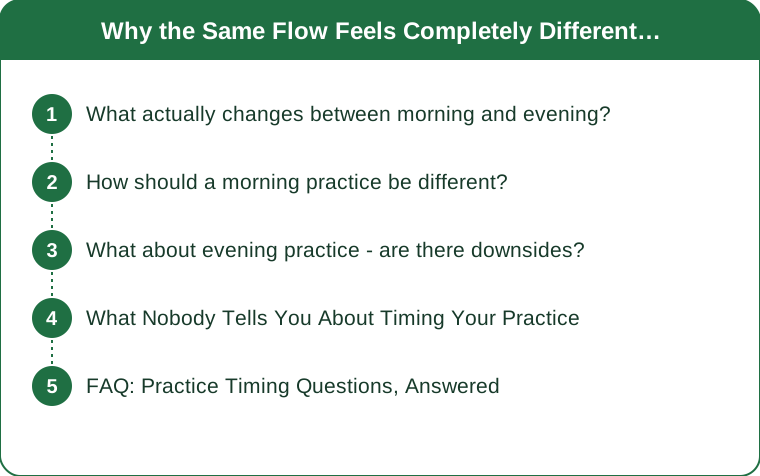
What actually changes between morning and evening?
Four things, all with reasonable physiological support.
Spinal disc hydration. Intervertebral discs absorb fluid overnight while you are lying down and lose it under compression during the day. People are measurably taller in the morning - typically around 1-2cm - and the discs are at their most swollen on waking.
Why that matters for practice: fuller discs mean less spinal flexion is available and more stress is placed on the disc structures during forward bending. Some guidance suggests avoiding deep loaded spinal flexion in the first hour or so after waking for this reason, particularly if you have any history of back trouble.
Core body temperature. Body temperature follows a daily rhythm, reaching its lowest point in the early hours and peaking in the late afternoon or early evening. Warmer muscle is more compliant - it lengthens more easily and tolerates stretch better. The late afternoon to early evening window is when body temperature and flexibility both peak.
Synovial fluid viscosity. The fluid in your joints is more viscous when cold and thins with movement. This is the physical basis of morning stiffness - the sensation of joints needing to be worked loose is not imaginary.
Nervous system state. Cortisol peaks shortly after waking, which supports alertness. By evening, the system is generally shifting toward parasympathetic dominance, which is why evening practice often feels easier to settle into mentally even when the body is more capable of effort.
Which produces a slightly paradoxical situation: the body is more flexible in the evening but often more willing in the morning.
How should a morning practice be different?
Longer ramp, less deep flexion early, more movement before stillness.
Extend the warm-up substantially. What takes five minutes in the evening takes ten to fifteen in the morning. Gentle spinal movement - cat-cow, easy twists, standing side bends - before anything that asks for range.
Delay deep forward folds. Given fuller discs on waking, deep loaded spinal flexion is worth postponing until you have been up and moving. Standing forward folds with bent knees are gentler on the discs than seated ones, because the pelvis can rotate rather than the spine taking the whole movement.
Prefer dynamic to static early. Moving through range repeatedly warms tissue and thins synovial fluid. Holding a long static stretch on cold tissue is both less effective and less comfortable - save longer holds for the end of the session.
Adjust expectations rather than forcing. The depth you reach in an evening practice is not available at 6:30am, and pushing toward it is how morning practice produces strains. Working at roughly 70-80% of your evening range is a sensible frame.
A practical morning sequence shape:
- 5 minutes of gentle spinal mobility, lying or on all fours
- 5 minutes of standing movement - sun salutations at an easy pace
- 15-20 minutes of your actual practice, building gradually
- 5 minutes of longer holds and stillness at the end, when tissue is warm
The trade-off worth naming: morning practice is less about range and more about starting the day in a different state. If depth is the goal, evening serves it better.

What about evening practice - are there downsides?
One meaningful consideration, and it depends on intensity.
Vigorous evening practice can affect sleep for some people. Intense exercise raises core body temperature and sympathetic nervous system activity, and the drop in core temperature is part of the signal for sleep onset. A demanding session close to bedtime can delay that.
The evidence here is more nuanced than the folk wisdom. Reviews of evening exercise and sleep generally find that moderate exercise does not harm sleep and may improve it, with effects mainly appearing for vigorous exercise finishing within roughly an hour of bed.
For yoga specifically, this mostly does not apply. Slower, breath-led practice tends to shift the nervous system toward parasympathetic activity, which supports rather than disrupts sleep. A strong vinyasa or power practice at 9:30pm is a different proposition from a restorative sequence.
The practical split:
- Vigorous practice: aim to finish 90 minutes or more before bed
- Moderate flow: generally fine at most evening times
- Restorative, yin, or breath-focused: actively helpful close to bed
The other evening consideration is accumulated fatigue. You have been on your feet all day, and evening practice arrives on a tired body. Range of motion is better; energy is often lower. That is why evening sessions frequently feel physically capable and mentally reluctant - the opposite of morning.
What Nobody Tells You About Timing Your Practice
Five things that get lost in the morning-versus-evening debate.
Consistency beats optimal timing by a wide margin. A practice you do at a suboptimal time is worth more than one you skip waiting for the right window. The physiological differences are real and modest; the difference between practising and not practising is enormous.
Your body adapts to the time you practise. Regular morning practice produces some adaptation - people who practise consistently in the morning report less morning stiffness over time. The gap between morning and evening capability narrows with habit.
The measurable height difference is a useful mental model. You genuinely are taller at 7am than at 7pm. Once you know the discs are literally fuller, morning stiffness stops feeling like a personal failing and starts feeling like information.
Room temperature does a lot of the work. Much of the morning stiffness attributed to circadian rhythm is simply a cold room. Practising in a warm space substantially reduces the difference - which is why heated classes feel similar regardless of the hour, and why autumn mornings feel notably stiffer than summer ones.
Injury risk in cold morning practice is mostly about ambition, not timing. Morning practice is not inherently riskier. It becomes riskier when you attempt the same depth you reach in the evening, on tissue that is not there yet.
FAQ: Practice Timing Questions, Answered
Is it bad to do deep forward folds first thing in the morning?
Deep loaded spinal flexion in the first hour after waking places more stress on discs that are at their most hydrated. It is not dangerous for everyone, and it is worth being more conservative if you have any history of back trouble. Standing folds with soft knees are the gentler option.
Will I ever be as flexible in the morning as in the evening?
The gap narrows considerably with consistent morning practice but rarely closes entirely - core temperature and disc hydration follow rhythms that persist. Working at roughly 70-80% of your evening range in the morning is a realistic expectation rather than a limitation.
Does evening yoga interfere with sleep?
Slower and restorative practice generally supports sleep. Vigorous practice within about an hour of bed can delay sleep onset for some people, because core temperature and arousal need to come down. Matching the style to the hour handles it.
Why am I so much stiffer on autumn mornings?
A colder room. Synovial fluid is more viscous when cold and muscle is less compliant, so a 16-degree room in October produces noticeably more stiffness than a 22-degree room in July. Warming the space is the fix, and it makes more difference than most people expect.
Should I change my practice as the seasons change?
Mainly the warm-up. Longer, gentler ramps in colder months, and a warmer room if you can manage it. The practice itself does not need restructuring - just more runway before it.
TL;DR:
- Spinal discs rehydrate overnight, so you are taller and less flexible in spinal flexion on waking
- Core temperature and flexibility peak in late afternoon to early evening
- Morning practice needs a 10-15 minute ramp and roughly 70-80% of evening range
- Delay deep loaded forward folds until you have been up and moving
- Vigorous practice within an hour of bed can delay sleep; restorative practice supports it
- Room temperature explains more morning stiffness than circadian rhythm does
Morning stiffness is disc hydration and a cold room, not a lack of discipline.
See It in Motion
Seen here: Racerback Tank Top - White — shop it on bubblelime.com
Keep Reading
This article is for general informational purposes only and is not medical advice. It is not a substitute for professional diagnosis or treatment. Always consult a qualified healthcare provider about your individual situation, especially before making significant changes to your diet or exercise routine.