Why Your Morning Yoga Flow Feels Harder Than Your Evening One
Quick Answer: Your morning body is genuinely less mobile than your evening body, and it is not a fitness problem. Spinal discs rehydrate overnight and sit slightly taller and stiffer, core body temperature is at its daily low, and connective tissue moves less easily when cold. Most people are 10 to 15 percent less flexible within the first hour of waking. The fix is not pushing harder - it is changing the shape of the first ten minutes so the flow meets the body you actually have.
You did the same sequence last night and floated through it. This morning your hamstrings feel like they were replaced overnight with something from a hardware store. Nothing is wrong with you.

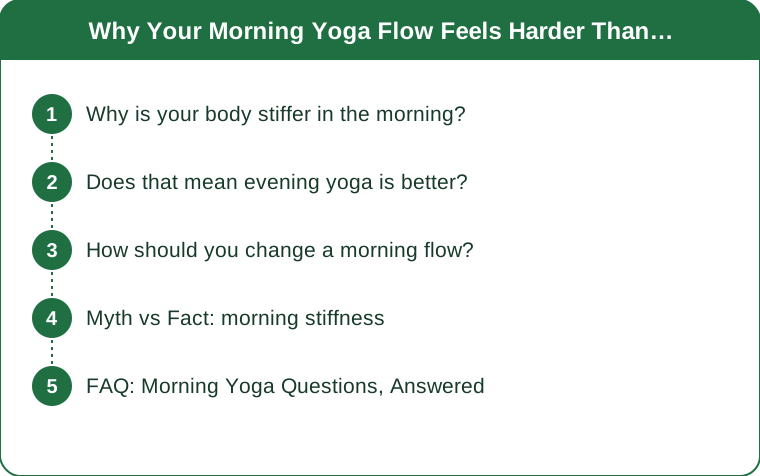
Why is your body stiffer in the morning?
Three things happen while you sleep, and all of them make 7am harder than 7pm.
Your spinal discs rehydrate. Lying down for seven or eight hours takes the compressive load off your spine, and the discs draw water back in. You are measurably taller in the morning - usually by about half an inch to three quarters of an inch - and that extra height comes with less give in the spine. Deep forward folds and twists feel restricted for exactly this reason.
Your core temperature is at its low point. Body temperature bottoms out roughly two hours before you wake and climbs through the day, peaking in the late afternoon or early evening. Cooler tissue is stiffer tissue. Muscle and fascia move more easily as temperature rises, which is why an evening flow feels like it happens in a warmer body - because it does.
You have not moved yet. Synovial fluid in the joints thins and redistributes with motion. Eight hours of stillness means you start the day before that process has begun.
None of this is damage, and none of it is a sign you have lost flexibility. It is a daily cycle that everyone rides, whether they notice it or not.
Does that mean evening yoga is better?
Better for range of motion, yes. Better overall, not necessarily - and the honest answer is that they are different tools.
Evening flows favor depth. A warmer body plus a day of accumulated movement means deeper folds, easier hip opening, and more comfortable backbends. If your goal is flexibility work or a longer hold practice, late afternoon through early evening is the physiological sweet spot.
Morning flows favor consistency. This is the part nobody weighs properly. The best practice is the one that actually happens, and mornings are far more protected from the things that eat a schedule - work running long, a friend calling, being genuinely too tired by 8pm. People who practice in the morning miss fewer sessions, and consistency beats depth over any timeframe that matters.
Morning flows also change how the day feels. Ten minutes of movement before a screen enters the picture tends to reduce the mid-morning stiffness that desk work creates, because you started the day already unlocked instead of already tightening.
If you can only practice in the morning, you have not chosen the worse option. You have chosen the one that needs a different warm-up.

How should you change a morning flow?
Do not do the evening sequence earlier and expect it to work. Change the first ten minutes and the rest takes care of itself.
Start supine, not standing. Lying-down movements - knees to chest, gentle supine twists, ankle circles, a slow bridge - let the spine decompress gradually instead of loading it immediately in a standing fold.
Move before you stretch. Two or three minutes of small, repetitive movement raises tissue temperature far faster than holding a stretch does. Cat-cow for 90 seconds beats a two-minute forward fold as a first move, every time.
Delay deep forward folds by ten minutes. This is the single highest-value change. Loaded spinal flexion first thing in the morning, on freshly hydrated discs, is the least comfortable and least useful thing you can do at that hour. Put it in the back half of the sequence.
Reduce your depth expectation by a quarter, not your effort. Same sequence, same time, less range. You are not backing off, you are meeting the tissue where it is.
Add breath before movement. Sixty seconds of slower breathing shifts the nervous system out of the just-woke-up state, and a calmer nervous system tolerates range better than a startled one.
Myth vs Fact: morning stiffness
Myth: If you are stiff in the morning, you are not flexible.
Fact: Morning range is the least representative measurement of your flexibility you can take. Test yourself at 6pm if you want an honest number. The stiffness is a timing artifact, not a ceiling.
Myth: You should stretch hard first thing to loosen up.
Fact: Cold, rested tissue tolerates aggressive stretching poorly, and the discs are at their most hydrated - the least ideal moment for deep flexion. Gentle movement first, depth later.
Myth: Morning stiffness means you slept badly.
Fact: Some morning stiffness is universal and normal. The kind worth noticing is stiffness lasting more than 30 to 45 minutes after you start moving, especially with joint swelling or pain - that pattern is worth a conversation with a professional rather than a harder flow.
Myth: You will eventually stop being stiff in the morning if you practice enough.
Fact: You get better at moving through it faster - the ten-minute unlock becomes a four-minute one. The underlying daily cycle does not disappear, because it is not a fitness variable.
Myth: A hot shower does the same thing as a warm-up.
Fact: It helps a little, and it is genuinely pleasant, but surface warming is not the same as raising tissue temperature through movement. Use it as an assist, not a substitute.
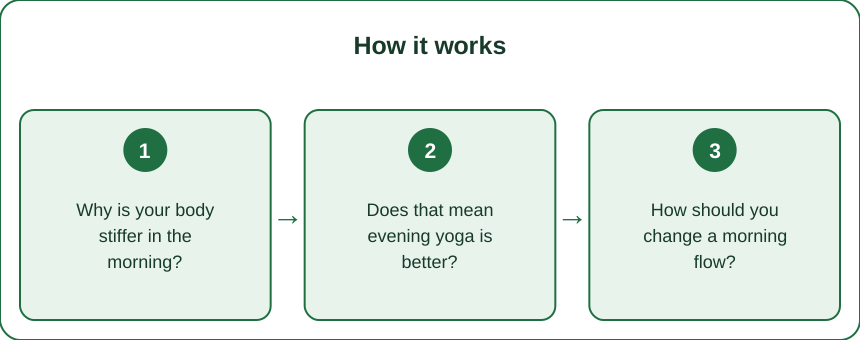
FAQ: Morning Yoga Questions, Answered
How long does it take to feel unstiff in the morning?
For most people, about 10 to 20 minutes of gentle movement brings range close to daytime normal, though the deepest ranges keep improving for hours. If you are still noticeably stiff after 45 minutes of being up and moving, that is worth mentioning to a professional rather than solving with more stretching.
Should I eat before a morning flow?
A short flow of 20 minutes or less is generally comfortable on an empty stomach. Longer or more vigorous sessions usually go better with something small - a banana or a few dates about 30 minutes before. Do what feels steady rather than following a rule.
Is it bad to do the same sequence every morning?
Not at all, and there is a real advantage to it: a familiar sequence removes decision-making at the exact hour when decision-making is hardest. Vary it every few weeks so the same tissues are not always the ones asked to work, but the repetition itself is a feature.
This is general information, not medical advice.
TL;DR:
- Morning stiffness is real physiology - rehydrated spinal discs, your lowest core temperature of the day, and eight hours without movement.
- Expect roughly 10 to 15 percent less range in the first hour, and stop reading it as lost flexibility.
- Restructure rather than push: start supine, move before you stretch, and delay deep forward folds by ten minutes.
- Evening wins on depth, morning wins on consistency - and consistency is the one that compounds.
The most useful shift is giving up the idea that the flow should feel identical at every hour. It never will. Once you build the morning version around a body that is genuinely colder and taller than it was last night, that first ten minutes stops feeling like a fight and starts feeling like the point.
See It in Motion
Seen here: Crewneck Short Sleeve Workout T-Shirt — shop it on bubblelime.com
Keep Reading
This article is for general informational purposes only and is not medical advice. It is not a substitute for professional diagnosis or treatment. Always consult a qualified healthcare provider about your individual situation, especially before making significant changes to your diet or exercise routine.