A Yoga Flow for a Jaw You Did Not Know You Were Clenching
Quick Answer: Jaw tension is closely linked to neck position, tongue posture, and breathing pattern, which is why isolated jaw massage gives only brief relief. A 12-minute sequence that mobilises the upper neck, releases the front of the throat and chest, resets tongue position, and lengthens the exhale tends to hold considerably longer. The single most useful cue is resting the tongue on the roof of the mouth with the teeth apart - jaw muscles cannot fully relax while the teeth are touching.
You notice it at a red light, or halfway through an email. Teeth together, jaw set, shoulders somewhere near your ears. You unclench, and four minutes later you are doing it again.

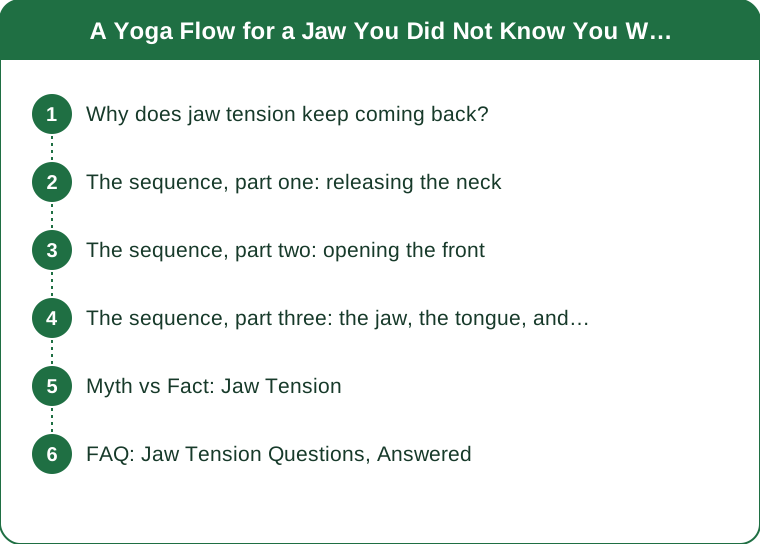
Why does jaw tension keep coming back?
Because the jaw is downstream of several things, and treating it locally treats the symptom.
Head position drives it. When the head sits forward of the shoulders - the default at a desk, a phone, or a steering wheel - the muscles at the front of the neck shorten and the ones under the jaw take on stabilising work they were not designed for. The masseter and temporalis then hold more tone. This is why jaw tension and neck tension travel together so reliably.
Breathing pattern matters. Habitual mouth breathing, or shallow upper-chest breathing, keeps the tongue low in the mouth and the jaw slightly open and unsupported, which encourages compensatory clenching. Nasal breathing with the tongue resting on the palate does the opposite.
Tongue position is the piece almost nobody mentions. With the tongue resting on the roof of the mouth just behind the front teeth, the jaw has a stable reference and the teeth naturally sit slightly apart. With the tongue resting on the floor of the mouth, the teeth tend to close and clenching becomes the resting state.
And stress is genuinely a driver, not a vague one. Clenching is a common physical expression of sustained low-grade stress, which is why it worsens in busy weeks and often shows up at night as sleep bruxism.
The practical implication: a flow that only stretches the jaw addresses none of these. A flow that changes head position, opens the front of the neck and chest, resets tongue position, and slows the breath addresses all four. This is general information, not medical advice - persistent jaw pain, clicking with pain, or difficulty opening the mouth is worth a dental or medical assessment.
The sequence, part one: releasing the neck
Everything starts here, because the jaw will not stay released while the neck is holding.
Seated tall, three minutes total.
Chin nods, 8 slow repetitions. Sit tall, look straight ahead. Without tilting the whole head, draw the chin very slightly back and down as if making a small double chin, then release. This mobilises the upper cervical joints specifically - the ones directly implicated in jaw mechanics. Small movement, no force. If it feels big, it is too big.
Lateral neck lengthening, 45 seconds each side. Drop the right ear towards the right shoulder. Let the left hand slide down towards the floor to anchor the shoulder. Breathe into the length. Then, keeping the position, turn the nose slightly towards the right armpit to shift the stretch towards the back of the neck, and hold another 15 seconds.
Sternocleidomastoid release, 30 seconds each side. Turn the head to the right, then tilt the chin slightly upward. You should feel a line down the front-left of the neck. This muscle is heavily involved in forward head posture and it refers sensation into the jaw and ear in many people.
Suboccipital release, 60 seconds. Lie on your back with two tennis balls or a rolled towel under the base of the skull, just either side of the spine. Let the weight of the head sink. Nod gently a few times. This is the highest-return minute in the whole sequence for most people.
The sequence, part two: opening the front
The chest and throat pull the head forward. Opening them lets the head come back without effort.
Supported fish, 90 seconds. Lie back over a rolled blanket or bolster placed lengthways along the spine, arms out to the sides, palms up. Let the head rest back so the front of the throat lengthens. If the neck feels compressed, put a folded towel under the head. Breathe slowly through the nose.
Low cobra, 6 slow repetitions. Lie face down, hands under shoulders. Press lightly to lift the chest without straightening the arms, keeping the back of the neck long and the gaze down and slightly forward rather than up. Lower on the exhale. The point is thoracic extension, not a big backbend.
Thread the needle, 60 seconds each side. From all fours, slide the right arm under the body, resting on the right shoulder and the side of the head. This rotates the upper back, which is where restriction quietly forces the neck to compensate.
Doorway or wall chest opener, 45 seconds each side. Forearm on a wall at shoulder height, rotate the body away. Keep the chin level rather than jutting forward - this is where people undo the work.
Puppy pose, 60 seconds. From all fours, walk the hands forward and let the chest sink towards the floor with hips staying over the knees. Rest the forehead down, not the chin. Letting the forehead take the weight allows the jaw to hang, and for many people this is the first moment in the sequence where the jaw genuinely lets go.

The sequence, part three: the jaw, the tongue, and the breath
Only now, and only briefly, because by this point the surrounding tissue has stopped fighting.
Tongue reset, 60 seconds. Sit comfortably. Rest the whole tongue - not just the tip - lightly against the roof of the mouth, tip just behind the upper front teeth. Let the teeth come apart by two or three millimetres. Lips together, breathing through the nose. This is the resting position to return to all day, and the entire sequence exists partly to make it achievable.
Jaw release, 8 slow repetitions. With the tongue still on the palate, let the jaw hang open as far as it goes without the tongue leaving the roof of the mouth - which is not very far, and that is the point. Close slowly. This works the opening muscles gently without engaging the clenchers.
Masseter and temporalis self-massage, 60 seconds each side. Find the muscle at the angle of the jaw - it bulges when you clench. Press with two fingers and hold rather than rubbing, breathing out slowly, for about 30 seconds. Then move to the temple and repeat. Firm, not painful.
Extended exhale breathing, 3 minutes. Inhale through the nose for a count of four, exhale for a count of six to eight. A longer exhale shifts the nervous system towards a parasympathetic state, and the jaw responds to that more reliably than to any stretch.
Finish in savasana for two minutes with the tongue on the palate and the teeth apart. If you notice the teeth touching, that is not failure - it is the data. Separate them and continue.
Myth vs Fact: Jaw Tension
Myth: Jaw tension means you need a night guard. Fact: A night guard protects the teeth from grinding damage, which is genuinely valuable if you grind. It does not stop the clenching or address the cause. Both can be true at once - protect the teeth and address the pattern.
Myth: Massaging the jaw fixes it. Fact: It provides short-term relief and is worth doing, but the tension returns because head position, breathing, and tongue posture have not changed. Local treatment for a systemic pattern gives temporary results.
Myth: Clenching is a habit you can just stop. Fact: Much of it is unconscious and a large portion occurs during sleep, where willpower does not apply. Changing the resting position of the tongue and jaw during the day is the more workable lever because it changes the default rather than requiring vigilance.
Myth: Jaw and neck pain are separate problems. Fact: They are mechanically linked. The upper cervical spine and the temporomandibular joint influence each other directly, which is why upper neck mobilisation often reduces jaw symptoms and why jaw tension so often accompanies desk-related neck pain.
Myth: If it clicks, something is damaged. Fact: Painless clicking in the jaw is common and frequently not clinically significant. Clicking accompanied by pain, locking, or difficulty opening is a different matter and warrants assessment. This is general information, not medical advice.
FAQ: Jaw Tension Questions, Answered
Can yoga actually help TMJ pain?
It can help the contributing factors - forward head posture, upper neck restriction, chest tightness, and stress-driven breathing patterns. It is not a treatment for temporomandibular joint disorders, which have varied causes and are best assessed by a dentist or physiotherapist who works with the jaw.
Where should my tongue rest?
Lightly against the roof of the mouth with the tip just behind the upper front teeth, teeth slightly apart, lips together, breathing through the nose. This is the position most jaw and orofacial specialists describe as the resting posture, and it makes clenching considerably harder.
How often should I do this sequence?
Daily for the first two weeks, ideally in the evening when the day’s tension has accumulated, then three or four times a week. The tongue reset and extended exhale can be done anywhere, several times a day, and those are the parts that change the default.
Why does my jaw hurt more in stressful weeks?
Clenching is a common physical response to sustained stress, and sleep bruxism increases with stress in many people. The mechanical work helps, but if the pattern tracks your workload, addressing the load and the sleep is part of the answer rather than an aside.
TL;DR:
- Jaw tension is driven by head position, breathing, tongue posture, and stress - not by the jaw alone.
- Release the upper neck and open the chest before touching the jaw itself.
- Tongue on the palate with teeth apart is the resting position to keep returning to.
- A longer exhale does more for jaw tone than any stretch.
- Painless clicking is common; clicking with pain or locking needs assessment.
Twelve minutes, mostly spent nowhere near your jaw. That is the part that makes it work.
See It in Motion
Seen here: Racerback Tank Top - White — shop it on bubblelime.com
Keep Reading
This article is for general informational purposes only and is not medical advice. It is not a substitute for professional diagnosis or treatment. Always consult a qualified healthcare provider about your individual situation, especially before making significant changes to your diet or exercise routine.