A Gentle Yoga Flow for Lower Back Pain
Quick Answer: A gentle yoga flow for lower back pain runs about 15 minutes: cat-cow, child’s pose, supine twist, knees-to-chest, and bridge. Move slowly, hold each pose 5–8 breaths, and never push into sharp pain. Gentle movement generally beats bed rest for non-specific low back pain — stiffness usually improves with motion, not stillness.
Your lower back has been tight since Tuesday. Sitting made it worse. Standing made it worse. Lying down helped for about ten minutes and then made it worse.
Here’s the annoying truth: the thing that usually helps is the thing you least feel like doing. Not a hard workout — just slow, deliberate movement that reminds your back it’s allowed to move.
Why Does Movement Help More Than Rest?
For decades, the standard advice for a sore back was to lie down until it passed. That advice has largely been reversed.
Prolonged rest lets the muscles around your spine stiffen and deconditions the ones that support it. Gentle movement does the opposite: it increases blood flow to the area, keeps tissue mobile, and — importantly — reduces the fear response that makes people brace and guard, which itself creates more tension.
Yoga works well here because it’s load-free. There’s no impact, no external weight, and you control the range entirely. You can do 40% of a pose and still get most of the benefit, which is not true of most exercise.
The caveat: this is for ordinary, non-specific lower back tightness — the kind that builds from sitting, stress, and a weekend of yard work. It is not for back pain that follows a fall, radiates down your leg, or comes with numbness. More on that below.
The 15-Minute Flow
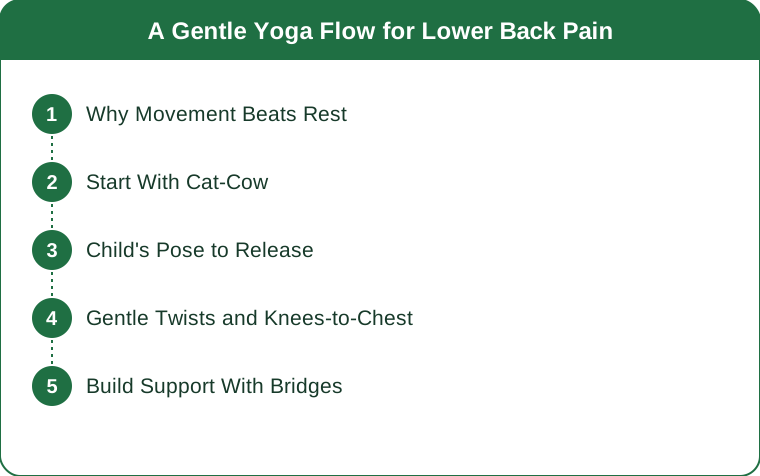
1. Cat-Cow — 8 slow rounds
On hands and knees. Inhale, drop the belly and lift the chest. Exhale, round the spine and tuck the chin. This mobilizes every segment of your spine and is the single best way to find out how your back is doing today before you ask more of it.
Go slower than feels natural. One full round should take about 6 seconds.
2. Child’s Pose — hold 8 breaths
Knees wide, big toes together, hips back toward heels, arms forward. This lengthens the lower back and gives immediate relief for most people. Breathe into your lower back specifically — you should feel the ribcage expand backward.
Come back here anytime during the flow when something feels like too much.

3. Knees-to-Chest — hold 5 breaths, then rock gently
On your back, hug both knees in. This decompresses the lower spine and stretches the glutes, which are quietly responsible for a surprising amount of back tightness. Rock slowly side to side for a light massage along the lumbar muscles.
4. Supine Twist — 6 breaths per side
Knees bent, drop them to one side, arms wide, gaze the opposite way. Keep both shoulders on the floor even if that means your knees don’t reach the ground. Range is not the goal here — the goal is a slow release around the lower spine and hips.
5. Bridge — 8 reps, 2-second hold at the top
Feet hip-width, press through the heels, lift the hips. This is the strength half of the flow. Your glutes and deep core are what take day-to-day load off your lower back, and weak glutes are one of the most common contributors to recurring tightness.
Squeeze at the top, lower one vertebra at a time.
Myth vs Fact: Yoga and Back Pain
Myth: You need to stretch your back more. Fact: Many sore backs are already over-stretched and under-supported. That’s why this flow ends with bridges rather than another stretch.
Myth: A deeper forward fold will fix it. Fact: Aggressive forward folding with a rounded lower back is one of the more reliable ways to aggravate an already irritated back. Bend your knees generously in any forward fold.
Myth: If it hurts, push through — it’s just tightness. Fact: Sharp or radiating pain is a stop signal. Dull stretching sensation is fine; sharpness is not.
Myth: You have to do this every day for it to work. Fact: Four or five sessions a week is plenty, and even three is meaningfully better than none. Consistency matters more than daily perfection.
How Often and How Long Until It Helps?
Aim for 15 minutes, 4–5 times a week. Most people notice their morning stiffness easing within 1–2 weeks, and the bigger change — fewer flare-ups in the first place — tends to show up around 6–8 weeks, once the glute and core strength from the bridges has actually developed.
Mornings work well for stiffness; evenings work well if your pain is driven by a day of sitting. Pick the one you’ll actually do.
When to See a Professional
Skip the flow and book an appointment if you have:
- Pain that shoots down one leg past the knee
- Numbness, tingling, or weakness in a leg or foot
- Back pain following a fall, crash, or specific injury
- Any change in bladder or bowel control — this is urgent
- Pain that wakes you at night or comes with fever or unexplained weight loss
Also worth a visit: back pain that hasn’t improved at all after 6 weeks of sensible self-management. A physical therapist can identify the specific driver in a single session, which beats guessing.
FAQ
Can yoga make lower back pain worse?
It can, if you push into deep forward folds, aggressive backbends, or twists with a rounded spine while the back is irritated. The gentle poses in this flow are low-risk, but the rule holds regardless: dull stretch is fine, sharp pain means back off.
How long should I hold each pose?
5–8 breaths for the static poses, which works out to roughly 30–45 seconds. Cat-cow and bridge are movement-based, so count reps instead — 8 rounds and 8 reps respectively.
Is it better to do this in the morning or at night?
Morning if you wake up stiff, since the flow eases overnight stiffness quickly. Evening if sitting all day is your trigger, since it undoes the day’s compression before you sleep. Both are effective — the one you’ll repeat is the right one.
TL;DR:
- Gentle movement usually beats rest for ordinary lower back pain.
- The flow: cat-cow, child’s pose, knees-to-chest, supine twist, bridge — about 15 minutes.
- Hold static poses 5–8 breaths; never push into sharp or radiating pain.
- Bridges are the important part — glute and core strength prevents recurrence.
- See a professional for leg pain, numbness, injury-related pain, or no improvement after 6 weeks.
This is general information, not medical advice.
See It in Motion
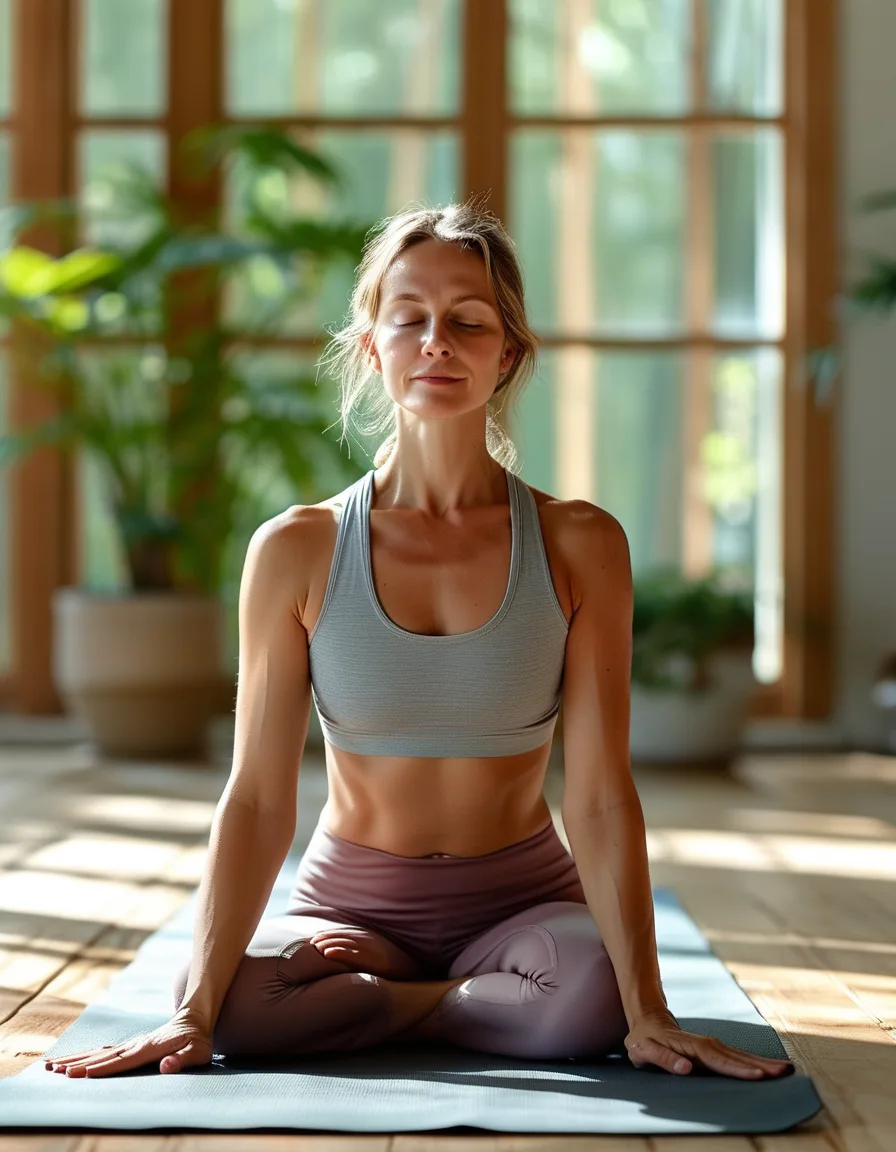
Seen here: Racerback Tank Top - White — shop it on bubblelime.com
Keep Reading
This article is for general informational purposes only and is not medical advice. It is not a substitute for professional diagnosis or treatment. Always consult a qualified healthcare provider about your individual situation, especially before making significant changes to your diet or exercise routine.