Yoga for Runners: The Stretches Your Miles Are Begging For
Quick Answer: Runners need four poses more than any others: low lunge for hip flexors, half splits for hamstrings, figure-four for the outer hip, and downward dog with pedaling feet for calves. Hold each for 60 seconds per side, right after a run while you’re warm. Two to three sessions a week maintains your range; daily improves it.
Runners and yoga have a classic arranged marriage. Runners need exactly what yoga offers — open hips, cooperative hamstrings, calves that aren’t made of rebar — and resist it on principle, because stillness is suspicious and there’s no pace data.
Consider this the diplomatic version. Fifteen minutes after your run, four poses that do the majority of the work, zero chanting required, mileage protected.

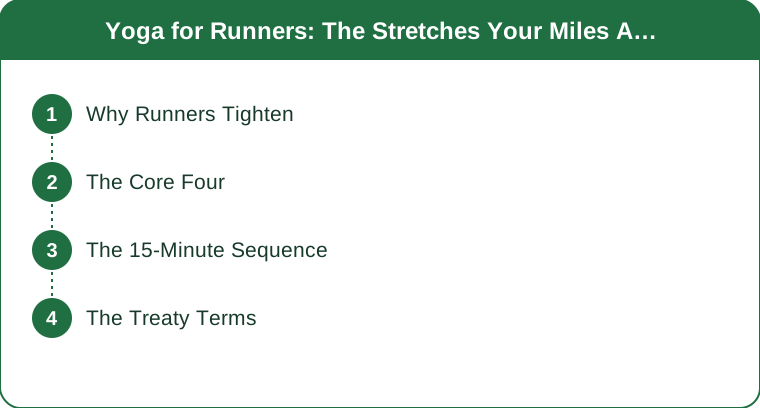
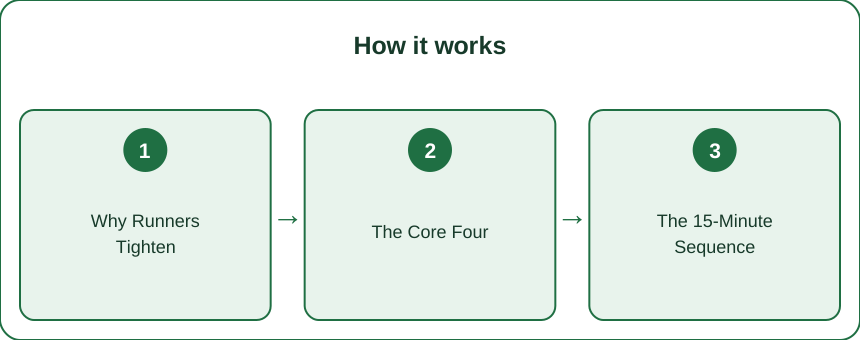
Why Do Runners Get So Tight?
Running is thousands of nearly identical strides through a fairly small range of motion. It’s magnificent for your heart and your head. It’s also a repetitive pattern that gradually shortens the tissues doing the most work.
Hip flexors shorten because running never fully extends the hip the way walking uphill or lunging does. Sitting at a desk between runs compounds it considerably.
Hamstrings work hard eccentrically on every stride and rarely get taken through full length.
Calves absorb the landing on every single footfall — for a typical runner that’s around 1,500 repetitions per mile across both legs.
Left unaddressed, the tightness starts editing your stride. You shorten slightly, your hip extension drops, your knee compensates. Edited strides tend to send the invoice to the knees eventually.
The Core Four
These four poses cover the majority of what running takes out of you. Do them post-run, while the tissue is warm.
Low lunge (Anjaneyasana) — hip flexors. Back knee down, front knee over ankle, hips sinking forward and down. Tuck your tailbone slightly to feel it in the front of the back-leg hip rather than the low back. Hold 60 seconds per side. This is where runners keep their mileage.
Half splits (Ardha Hanumanasana) — hamstrings. From the low lunge, shift your hips back over the rear knee and straighten the front leg, foot flexed. Bend the front knee generously — a slightly bent knee lets you hinge from the hip and actually reach the hamstring, where a locked knee usually just strains the back of it. Hold 60 seconds per side.
Figure-four — outer hip and glute. Lying on your back, cross one ankle over the opposite knee and draw the bottom thigh toward you. This is the release for the outer-hip tension that gets blamed on the IT band. Hold 60 seconds per side.
Downward dog with pedaling feet — calves. From down dog, bend one knee and press the opposite heel toward the floor, then alternate slowly for 60–90 seconds. Both the upper calf and the deeper soleus get attention.

The 15-Minute Sequence
Here’s the full version, in order.
Minutes 0–2: downward dog, pedaling the feet. Start here because it’s the gentlest re-entry after running.
Minutes 2–6: low lunge, 60 seconds each side, then half splits, 60 seconds each side. Flow between them on the same side before switching — it’s one transition instead of four.
Minutes 6–8: figure-four, 60 seconds each side.
Minutes 8–10: supine spinal twist, 60 seconds each side. Running loads the spine rotationally and this is the reset.
Minutes 10–15: legs up the wall. The runner’s dessert pose — lie on your back with your legs vertical against a wall and stay there for five minutes while you contemplate your splits. It drains tired legs and requires nothing from you.
Two to three post-run sessions a week maintains your range. Daily genuinely transforms it, and daily is easier than it sounds when the session is 15 minutes and happens somewhere you already are.
The Treaty Terms
This is maintenance yoga, not performance yoga. The distinction matters more than anything else here.
No ambition. You’re not trying to get deeper each session or reach a shape. You’re restoring range you spent on the run.
No forcing. A stretch should register around a 4 or 5 out of 10. If it’s a 7 and you’re bracing, you’ve gone past the point where the tissue relaxes — which means you’re getting less, not more.
Breath sets the pace. If you can’t breathe smoothly in a position, you’re too deep in it. Runners who approach stretching like an interval session are the ones who pull things.
Post-run, not pre-run. Long static holds before a run can temporarily reduce power output. Save these for after, and warm up with dynamic movement — leg swings, walking lunges — beforehand.
Gentle consistency keeps both the marriage and the mileage thriving.
What Nobody Tells You About Stretching for Runners
Stretching doesn’t prevent injury on its own. The evidence for static stretching as an injury-prevention tool is genuinely weak. What it reliably does is maintain range of motion, which keeps your stride from quietly shrinking over a training block. Strength work is the better injury lever — pair the two.
The IT band doesn’t stretch. It’s dense connective tissue and it’s not going to lengthen meaningfully. What you can address is the tension in the glutes and tensor fasciae latae that attach to it, which is what figure-four is actually doing.
Soreness and tightness aren’t the same thing. Post-run soreness resolves on its own in a day or two. Persistent tightness that’s present even when you’re rested is the thing stretching addresses.
Consistency beats duration. Fifteen minutes three times a week outperforms a single 90-minute class every Sunday by a wide margin.
If something hurts sharply, that’s not a stretch. Sharp, pinching, or nerve-like sensations — especially anything shooting down a leg — mean stop and get it looked at. Persistent pain in the same spot after two weeks of sensible training deserves a physical therapist rather than more stretching.
Mini FAQ
Should runners do yoga before or after a run?
After. Long static holds before running can briefly reduce force production and don’t reduce injury risk. Warm up with dynamic movements — leg swings, high knees, walking lunges — and save the held stretches for when you’re warm and finished.
How often should runners do yoga?
Two to three sessions of 15 minutes a week is enough to maintain your range of motion. If you’re running high mileage or sitting at a desk all day, daily short sessions will do more for you than one long class.
What is the best yoga pose for tight hips from running?
Low lunge, held for a full 60 seconds per side with the tailbone slightly tucked. It targets the hip flexors, which running shortens most and desk sitting shortens further. Figure-four is the necessary companion for the outer hip.
TL;DR:
- Running shortens hip flexors, hamstrings, and calves through thousands of identical strides.
- The core four: low lunge, half splits (bend that knee), figure-four, down dog with pedaling feet.
- 60 seconds per side, post-run while warm. Finish with five minutes of legs up the wall.
- Keep it at a 4–5 out of 10 intensity — forcing is how runners pull things.
- Two to three sessions weekly maintains; daily transforms. Pair it with strength work for injury prevention.
Low lunge, half splits, figure-four, calf pedals — fifteen warm minutes after the miles. Yoga isn’t the opposite of running; it’s running’s maintenance department, finally staffed.
See It in Motion
Seen here: Racerback Tank Top - White — shop it on bubblelime.com
Keep Reading
This article is for general informational purposes only and is not medical advice. It is not a substitute for professional diagnosis or treatment. Always consult a qualified healthcare provider about your individual situation, especially before making significant changes to your diet or exercise routine.