The Sun Salutation, Broken Down: Yoga's Greatest Hit, Pose by Pose
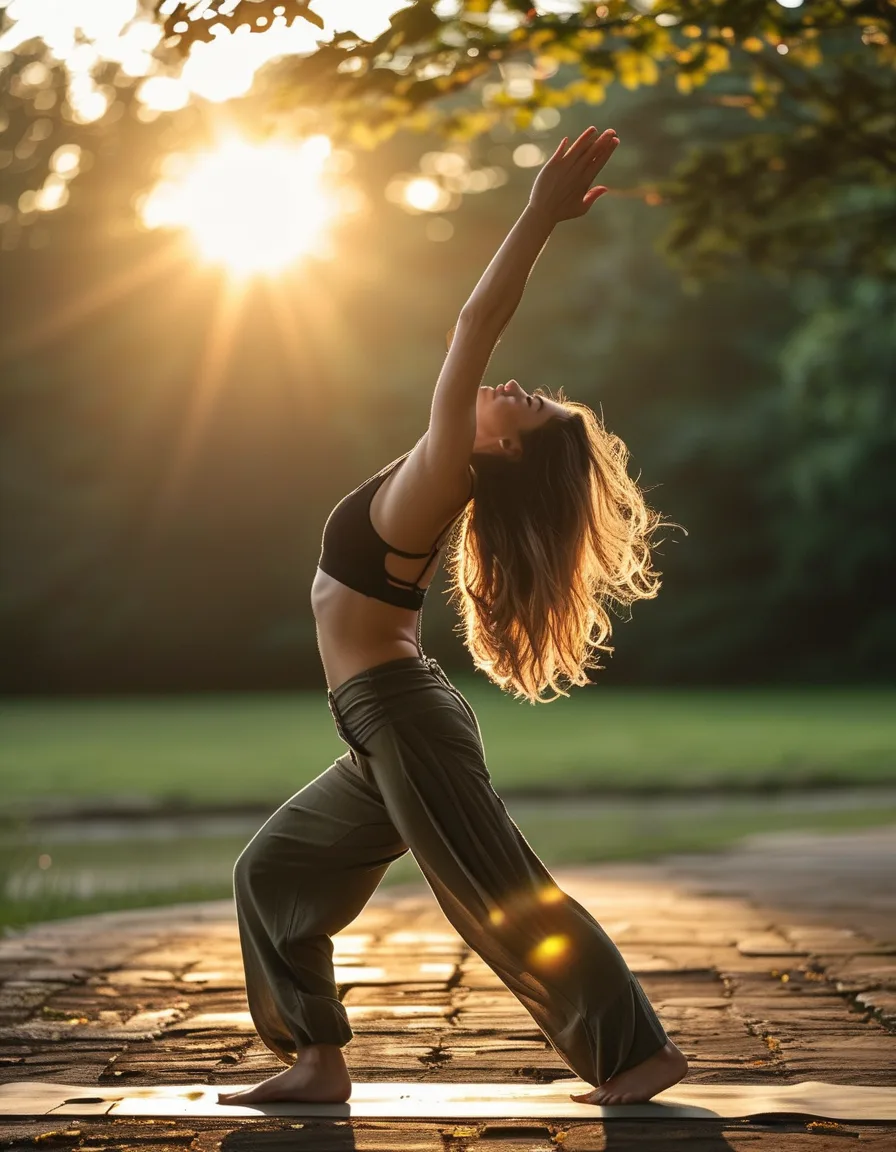
Quick Answer: A sun salutation (Surya Namaskar A) is a linked sequence of about nine poses — mountain pose, upward salute, forward fold, half-lift, plank, a low lowering, upward dog or cobra, and downward dog — moving one breath per pose. One full round takes roughly a minute, and three rounds is the standard morning dose, done before you’ve even had coffee.
You walk into class two minutes late, everyone’s already flowing through sun salutations like it’s muscle memory, and you’re a full beat behind guessing which arm goes where. Nobody actually teaches this sequence pose by pose — it’s just assumed you absorbed it by osmosis somewhere along the way. So here it is, broken down properly: every movement, the breath that links them, and the modifications that make it work for whatever body showed up to the mat today.
What are the poses in a sun salutation?
The classic round (Surya Namaskar A) moves through nine checkpoints, in order:
- Mountain pose — the tall starting point, your posture checkpoint before anything moves.
- Upward salute — inhale, arms sweep overhead.
- Forward fold — exhale, hinge at the hips. Bend your knees as much as you need; the fold is about the hinge, not your hamstrings’ pride.
- Half-lift — inhale, flatten the back halfway up. This is the most-skipped, most-important spine reset in the whole sequence.
- Step or hop back to plank.
- Lower down — knees-down is the standard modification here, not a beginner’s shame.
- Upward dog or cobra — inhale, chest opens.
- Downward dog — exhale, hips lift high. This is the sequence’s home base; most rounds hold it for five breaths.
- The return journey — step forward, half-lift, fold, rise back to standing.
One round, about one minute, and every joint in your body just moved.
Why does the breath matter in a sun salutation?
The breath is what turns nine separate positions into one flowing thing. Every movement rides an inhale or an exhale — inhales open and lift, exhales fold and ground. That pairing IS the choreography; a sun salutation done without the breath-link is really just calisthenics wearing Sanskrit names.
The pace comes from your breath, not the room’s clock. Slow, full breaths naturally produce slow, strong salutations — rush the breathing and you get a rushed, shallower version of everything. And because the linked sequence occupies your body and your breath at the same time, your mind’s usual background chatter gets no bandwidth left to run on. That’s the real reason three rounds can shift a whole morning more than the stretching alone would explain.
How do I modify a sun salutation for my body?
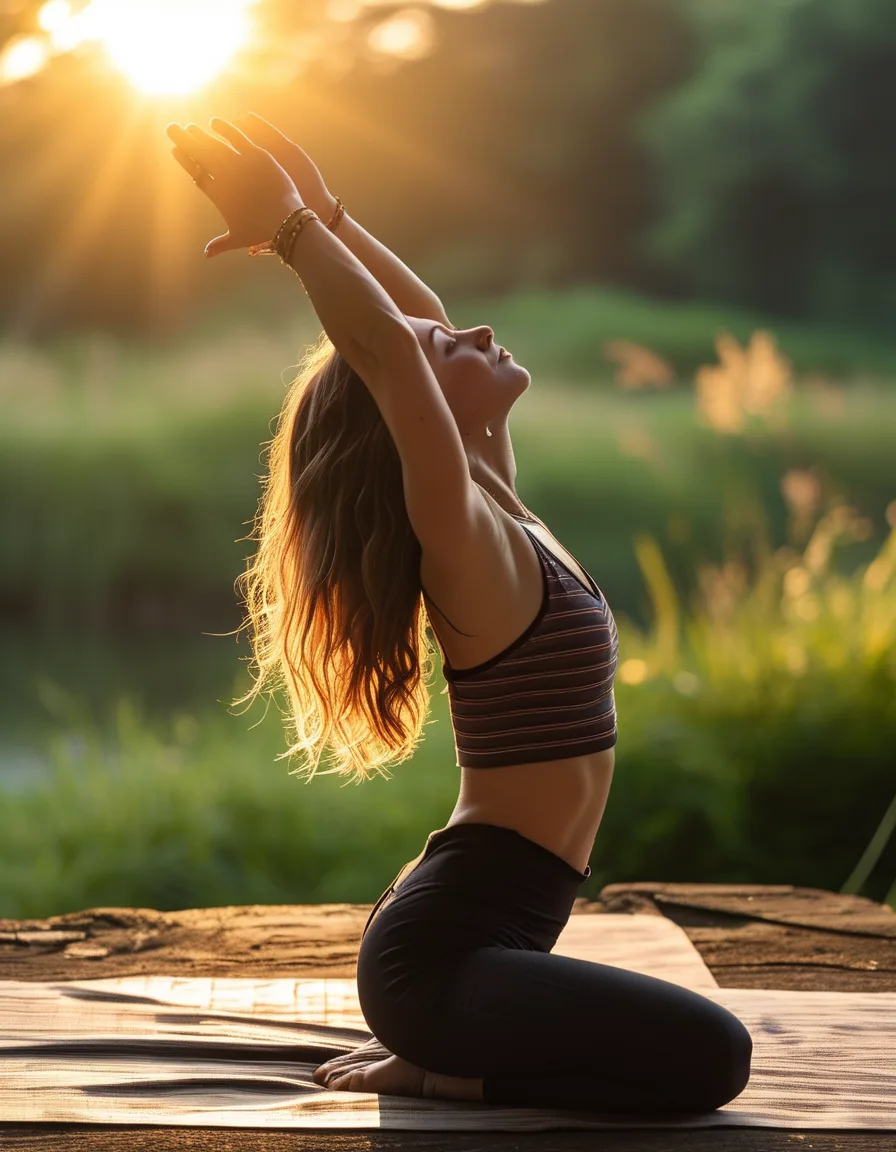
This sequence is supposed to fit the body doing it, not the other way around:
- Knees-down lowering — the standard path while you build push-up strength. The full chaturanga arrives when it arrives.
- Cobra over upward dog — if your lower back grumbles, the gentler backbend wins every time.
- Step instead of jump — jumping the transitions is a style choice, not a requirement.
- Hands on blocks in the fold — the flexibility accommodation that still lets you keep the hinge.
- The wall version — the entire sequence done standing against a wall, for anyone with limited mobility on the floor.
- The tempo dial — two breaths per move on strength days, one breath per move for the classic flow rhythm.
When and how often should you do sun salutations?
Think of the sequence as a toolkit you deploy differently depending on the day:
- Three rounds, morning minimum — under five minutes, and it beats scrolling your phone by every measure of waking your body up.
- Two rounds as a warm-up — before strength training or a run, it’s a full-body rehearsal in about 90 seconds.
- One round as a reset — between meetings or before a hard conversation, it works the same way a standing breath break does.
- 10 or 108 rounds — the counting practices, where the sequence becomes a moving meditation session on its own.
One sequence, learned once, used forever — that’s why it’s the greatest hit.
Mistakes Everyone Makes With Sun Salutations
Even people who’ve done thousands of these still trip on the same few things.
Skipping the half-lift. It’s the easiest pose to blur past on the way to the fold, and it’s the one doing the actual spine-protecting work.
Jumping when the knees are asking for a step. Jump transitions look impressive on camera; they’re optional everywhere else.
Holding the breath through plank. If you notice you’ve stopped breathing, you’re bracing, not flowing — and bracing is exactly what turns yoga into a workout it was never meant to be.
Treating the knees-down lower as a failure. It isn’t. It’s the modification that actually builds the strength for the full version — and that’s the mistake that surprises even long-time teachers: skipping it too early usually slows your progress, not speeds it up.
Mini FAQ
How many sun salutations should a beginner do?
Three rounds is a solid starting dose — about five minutes, done slowly, with knees down wherever needed. You can build toward longer counts, like 10 rounds, once the sequence feels automatic rather than effortful.
Is it okay to keep my knees down in a sun salutation?
Yes. Lowering with your knees down is the standard modification, not a lesser version — it’s how most practitioners build the strength for a full chaturanga over time.
Why is downward dog part of every round?
Downward dog is the sequence’s home base and reset point, usually held for about five breaths. It stretches your calves and shoulders and gives you a moment to check your breathing before the round continues.
TL;DR
- A sun salutation is nine linked poses, one breath per movement, taking about a minute per round.
- The breath — not the pace of the room — sets the speed; slower breathing makes a stronger salutation.
- Knees-down, cobra-over-updog, and step-not-jump are all legitimate modifications, not lesser versions.
- Three rounds in the morning (under five minutes) is the standard entry dose; two rounds work well as a warm-up.
- If wrist, shoulder, or lower-back pain shows up and doesn’t ease with modifications, check in with a physical therapist or experienced teacher before pushing through it.
See It in Motion
Seen here: High Waist Yoga Leggings with Side Pockets — shop it on bubblelime.com
Keep Reading
This article is for general informational purposes only and is not medical advice. It is not a substitute for professional diagnosis or treatment. Always consult a qualified healthcare provider about your individual situation, especially before making significant changes to your diet or exercise routine.