Why Your Hips Stay Tight No Matter How Much You Stretch Them
Quick Answer: Tightness is often the nervous system guarding a joint it doesn’t trust, not muscle fibers that are literally too short. Stretching lengthens tissue temporarily without removing the reason for the guarding — which is why strength through range, not more stretching, is usually what finally moves it.
Two years of pigeon pose. Every night, faithfully. And your hips are exactly as tight as they were in month three.
That’s not a discipline problem. It’s a diagnosis problem.

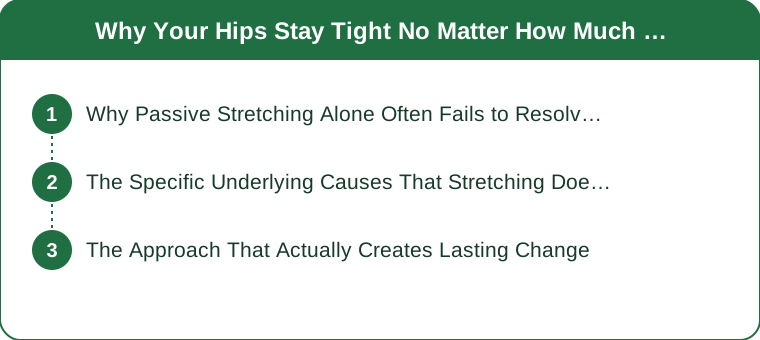
Why doesn’t passive stretching fix chronic tightness?
The sensation of tightness frequently reflects your nervous system protectively restricting a joint it doesn’t perceive as stable — not muscle fibers that are physically too short.
Pulling a joint into a longer range doesn’t address why that guarding started. The range improves for an hour; the trigger is untouched.
There’s a habit problem layered on top. Hours of daily sitting functionally shortens hip flexors, and a single session eases it right before the sitting re-establishes it.
And when surrounding muscles lack the strength to support a fuller range, the nervous system restricts that range on purpose — regardless of how much the tight-feeling muscle gets stretched. Sporadic sessions then produce temporary gains that revert in between, never accumulating.
What’s actually causing it?
- Sitting-related shortening. Daily hours in hip flexion reassert themselves between sessions no matter how deep any single stretch goes.
- Weak stabilizers. Insufficient glute and core strength means the nervous system never gets the stability signal it wants before allowing more range.
- Old injury guarding. A previous injury — even minor, even long healed — can leave protective patterns that outlast the tissue healing by years.
- Stress held physically. Hips are a common site for tension related to chronic stress, with no postural or structural cause involved at all.
- Anatomy. Individual variation in hip socket depth and femur shape means some people have a genuinely lower ceiling for certain ranges, regardless of soft tissue work.
That last one matters. Some ranges aren’t available to you, and no amount of stretching changes bone.

5 Mistakes Everyone Makes
1. Stretching harder when it doesn’t work. Escalating intensity against a protective response usually increases the guarding. More force is the opposite of the signal you want to send.
2. Only stretching the muscle that feels tight. The sensation is where the alarm rings, not where the fire is. Tight-feeling hip flexors frequently trace back to weak glutes.
3. Skipping active range work entirely. Passive holds tell the nervous system a range exists. Strength through that range tells it the range is safe to use. Only the second one sticks.
4. Long sessions, twice a week. The third mistake is the one that surprises most yoga practitioners — nervous system trust builds through frequency, not duration. Ten minutes daily beats an hour on Sunday, comfortably.
5. Treating a stress or injury pattern as a flexibility deficit. If the root cause is guarding from an old injury or chronic stress, another year of stretching won’t resolve it. Different problem, different professional.
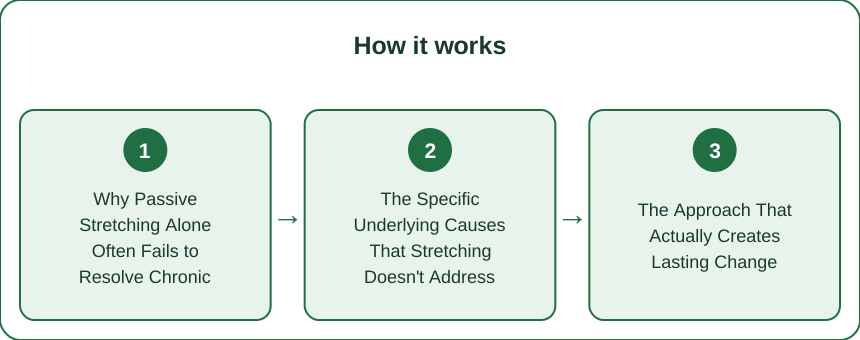
What actually creates lasting change?
Build the supporting strength. Glutes, core, and hip stabilizers. You’re giving the nervous system the stability signal it needs before it’ll release range — this is the highest-leverage item on the list.
Fix the sitting at the source. Shorter sitting stretches and frequent position breaks address the cause rather than compensating for it after the fact. A desk-based flow placed during the day beats a longer one at night.
Pair passive holds with active movement. Move under control through the new range, don’t just occupy it. That’s what teaches the nervous system the range is functionally available.
Frequency over intensity. Moderate practice most days across months outperforms occasional intense sessions. Trust is built repeatedly, not dramatically.
Address non-mechanical causes directly. Lingering injury guarding or chronic stress patterns need a professional, not more reps. Our hip-opening guide covers the movement side; the rest is outside what a flow can do.
When to see a professional: sharp or pinching pain in the front of the hip, pain that radiates into the groin or down the leg, clicking with pain, night pain, or any tightness that’s worsening rather than plateauing should be assessed by a physician or physical therapist. Hip impingement and labral issues both present as “tightness” and both get worse with aggressive stretching, so it’s worth ruling them out before you spend another year on the mat.
FAQ
How long does it take to see real change?
Think months, not weeks. Nervous system adaptation and genuine strength gains through range both run on a multi-month timeline — most people notice meaningful change somewhere between eight and sixteen weeks of near-daily practice.
Should I stop stretching altogether?
No. Passive stretching still has value; it just isn’t sufficient on its own. Keep it, and add strength through range — the combination is what’s been missing, not stretching itself.
Why do my hips feel tighter some days than others?
Sleep, stress, hydration, and the previous day’s activity all shift how protective the nervous system is feeling. Day-to-day variation is normal and says very little about your actual progress.
TL;DR:
- Chronic tightness is often nervous system guarding, not short muscle fibers.
- Passive stretching lengthens tissue temporarily without addressing why the guarding started.
- Real causes: daily sitting, weak glutes and core, old injury patterns, stress, and individual anatomy.
- The fix is strength through range plus reduced sitting — not more or harder stretching.
- Frequency beats intensity; nervous system trust builds through repetition across months.
- Sharp, pinching, radiating, or worsening hip pain needs a physician or physical therapist — impingement and labral issues masquerade as tightness and worsen with aggressive stretching.
See It in Motion
Seen here: Super High Waist Embossed Yoga Leggings with Inner Pocket — shop it on bubblelime.com
Keep Reading
This article is for general informational purposes only and is not medical advice. It is not a substitute for professional diagnosis or treatment. Always consult a qualified healthcare provider about your individual situation, especially before making significant changes to your diet or exercise routine.